
An AI SDR is an AI agent that runs the first stretch of a sales conversation: it writes to prospects and new leads, answers their replies and books the meeting with your sales team. A good one reads everything you already know about the person before it writes, and stays inside limits you set on what it may send without a human.
That definition leaves out the question that decides whether one works for you: how much it is allowed to decide without asking. Most of this piece is about that.
In short
- It works whichever way the lead arrived: outbound, inbound or picking up an old conversation.
- It should read what you already know before it writes, and research only the gaps.
- You choose how much it sends unsupervised, and negative replies should always reach a person.
- It is the wrong tool for a short list of strategic accounts, or before you can say who you sell to.
One agent, three ways a conversation starts
The title borrows from the human role, but the work is defined by the conversation, not by the channel. The same agent should handle all three of these, because the prospect does not care which team's tool contacted them.
Outbound. Someone who has never heard of you is on a list because they fit your ICP or showed a signal: a new sales leader, a round of funding, a burst of hiring. The AI SDR writes the first email or LinkedIn message around that reason, follows up, and when they reply, carries the conversation to a booked call.
Inbound. Someone filled in a demo form at 21:40 on a Friday. The AI SDR reads what they wrote, checks who they are, answers the question they actually asked and offers times on the right rep's calendar, rather than leaving them with an autoresponder until Monday.
Lifecycle. A meeting was missed, a trial went quiet, a deal was lost last spring and the account is suddenly reading your pricing page. The AI SDR picks the thread back up with the history in hand, so the message reads like a continuation, not a cold open.
In every case the output is the same: a conversation that ends in a booked meeting, an honest no, or a handover to a person.
What it should read before it writes
The quality of an AI SDR's message is set before the model writes a word. A strong one starts from what your systems already hold, and researches only what is missing. Running fresh web research on every lead is slow, costly and often less accurate than the record you already have.
- The record. Who they are, the company, its size and market, how well it fits your ICP, and whether an owner already exists in your CRM.
- The history. Every email, LinkedIn message and chat already exchanged, sent by a rep or by the AI, so it never repeats itself or contradicts a colleague.
- The signals. What they have done recently: pages viewed, forms filled, a reply to an earlier sequence, a leadership change at the account.
- Your knowledge base. Product facts, pricing logic, objection handlers, case studies. This is where the answers come from, not from the model's general knowledge.
If an AI SDR cannot see the history, it will send a cold opener to someone who booked a demo yesterday. That single failure does more damage than any badly phrased sentence.

How supervision works
Supervision is the setting that matters most, and it should not be all or nothing. You will want different levels for different segments, and you will want to move a segment up a level only after reading its drafts.
Supervised. Every message waits for a person to approve, edit or discard it. The right place to start, and where many teams keep high-value segments for good.
Semi-autonomous. Routine replies send on their own. Anything about pricing, anything technical and anything negative is held for a person.
Unsupervised. The agent sends on its own, but negative replies still go to a person. Worth it only once you have read enough of its drafts to trust the pattern.
Two controls sit on top of the level. A strict knowledge base mode limits answers to your own documents and hands over anything else. A value threshold sends leads above a certain size to human review whatever the level says.
Where its decisions stop and yours start
Fine to leave to the AI SDR
- Which detail from the record to open with.
- When to follow up, and on which channel.
- Answering a question your documents already answer.
- Offering times and booking the meeting with the right rep.
- Pausing when someone is out of office, and resuming when they are back.
Keep with a person
- Anything that changes a price, a term or a commitment.
- A reply that is angry, hurt or threatens to escalate.
- A question your documents do not answer.
- Your largest accounts, where one wrong sentence costs more than every saved hour.
An AI SDR applies your judgement at scale. If the judgement is missing, it scales the gap.
When you should not use one
There are honest reasons to wait, and a vendor that will not tell you them is worth noticing.
You cannot yet say who you sell to. If your ICP is a feeling rather than a description, an AI SDR will message the wrong people faster. Fix the definition first; it is a week of work, not a quarter.
You sell to a few dozen named accounts. When every touch is hand-crafted for one buying committee, the work is research and relationships, not volume. Use AI to prepare briefs for your reps instead of writing to the accounts.
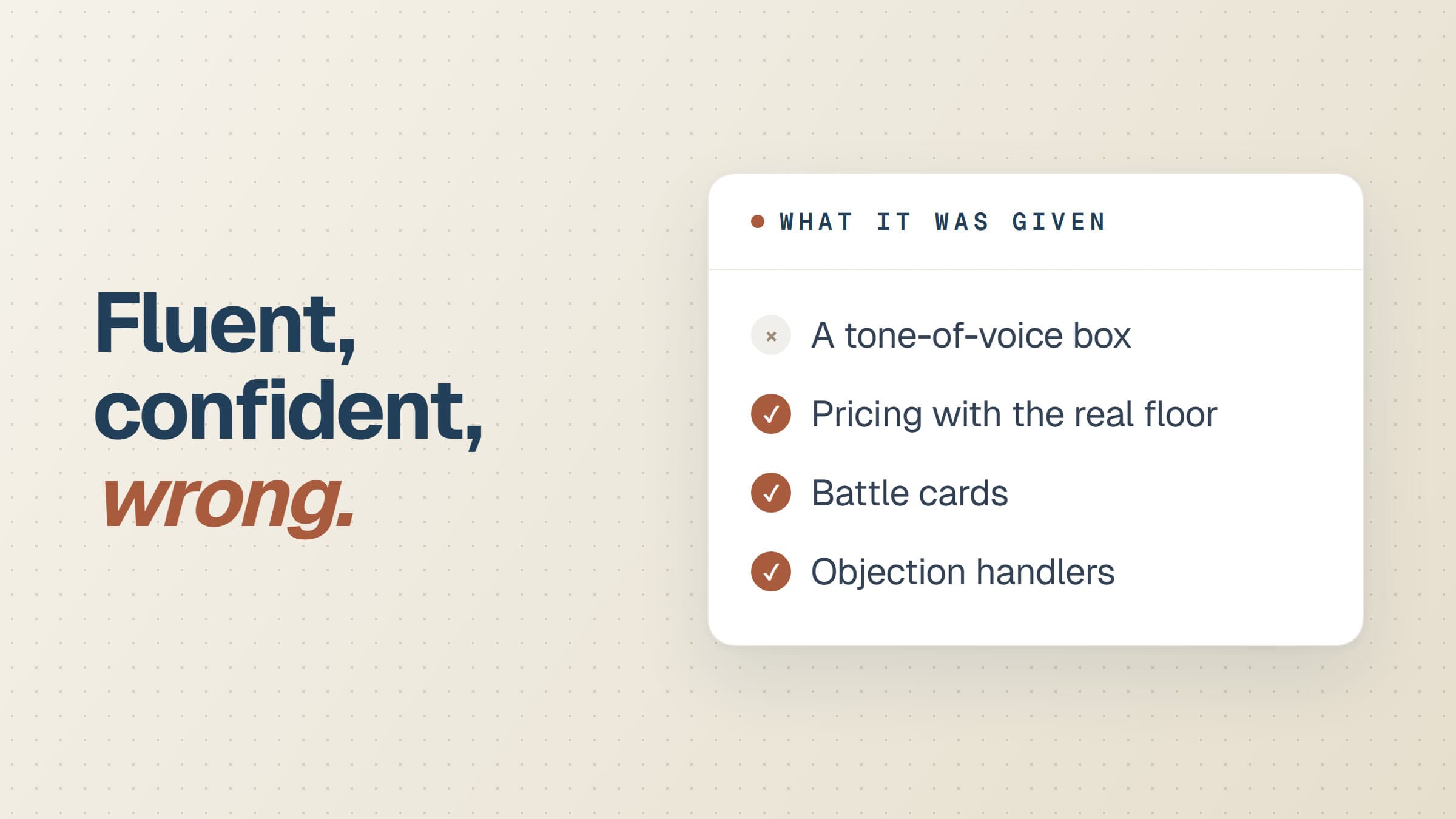
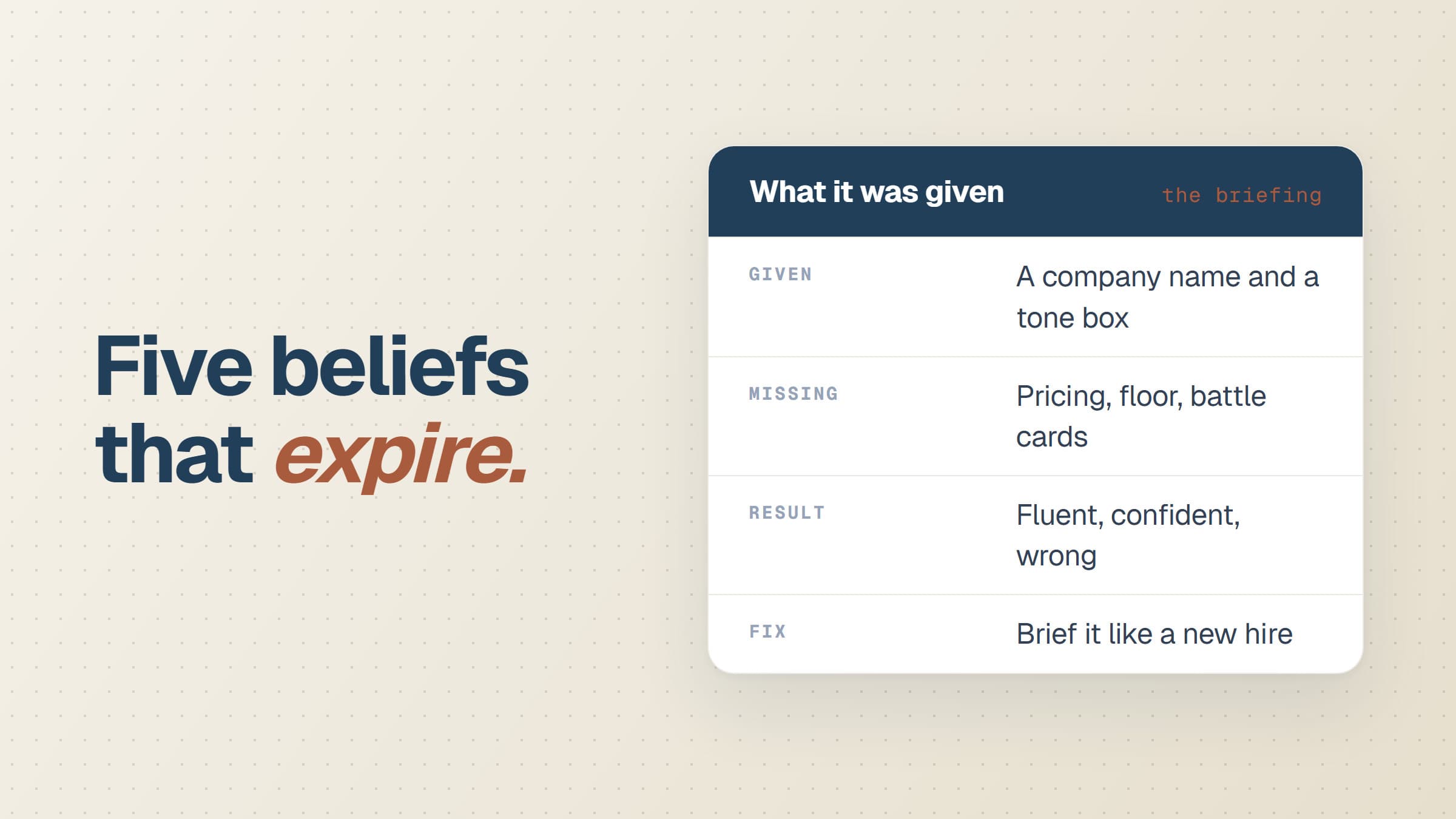
You have nothing to teach it. With no positioning, no pricing logic and no objection handling written down, it will sound fluent and say very little. Writing those documents is valuable on its own, and it is the training an AI SDR needs.
Every message needs legal sign-off. In some regulated markets each claim must be approved before it is sent. You can still run fully supervised, but expect the gain to come from drafting speed, not from sending on its own.
Questions to put to any AI SDR vendor
- Show me the full thread for one lead, every channel, with who sent each message.
- What does it read before writing, and what does it research fresh?
- Can I set supervision per sequence or segment, not just for the whole account?
- What happens to a negative reply at the most autonomous setting?
- Can I restrict answers to my documents, and what happens when it has no answer?
- Does it send from my reps' mailboxes, and does it stop when a lead books or replies elsewhere?
- Where is each AI decision logged, and for how long?
A demo on a sample company tells you very little. Ask to see it run on one of your own leads, with your own documents loaded.
Common questions
Whose name is on the emails an AI SDR sends?
In a sound setup, the rep's. The AI SDR writes on behalf of a named owner and sends from that person's own mailbox, so replies land with someone who can take over the thread at any point.
What does an AI SDR do when it doesn't know the answer?
It should hand the conversation to a person rather than improvise. Look for a strict mode that limits answers to your knowledge base and routes anything outside it to a human.
Can an AI SDR book meetings by itself?
Yes, if it is connected to your calendars and routing. It offers times from the right rep's availability and books the meeting directly, instead of sending a generic scheduling link.
Does it need a knowledge base before it starts?
It needs one before it answers questions. It can draft first-touch messages from the lead's record alone, but replies about pricing, product or objections are only as good as the documents you give it.
How do you see what it has said to a prospect?
Every message should sit in one thread per lead, marked by who sent it, alongside a log of the decisions the AI made. If you cannot audit a conversation after the fact, you cannot supervise it.
How Lazure's AI SDR fits this
Lazure's AI SDR is built in the shape described above. It works across outbound, inbound and lifecycle on one contact record, reads that record and the full conversation history before writing, checks your knowledge base, and books on the rep's calendar. It runs at the three supervision levels described here, with strict knowledge base mode, human review for high-value leads, and negative replies always handed to a person. It is trained the way you would train a new hire.