
Every article about inbound repeats the same number: reply within five minutes. The 2026 data supports it more strongly than most people realise, and also shows almost nobody manages it. The median B2B response time is around 42 hours.
The useful version has two parts. Speed matters most where a competitor is one tab away, and the reason teams miss the window is almost never that nobody was trying.
The short version
- Replying inside five minutes converts at roughly 21%, against about 2.3% after a day.
- Only around 7% of B2B teams actually hit it, and the median reply takes 42 hours.
- Most teams lose the window to list preparation and routing, not to slow reps.
- A fast wrong response is worse than a slightly slower right one.
Why speed works at all
It is tempting to think a fast reply signals eagerness. It does, slightly. The larger effect is simpler: the person who replies first gets to frame the conversation, and everyone after them is responding to that frame. The published gap is stark. 2026 studies put conversion at roughly 21% for replies inside five minutes against about 2.3% once a day has passed, and one dataset of 939 B2B companies found close rates of 32% versus 12% on the same comparison.
Someone who fills in your form has usually filled in two or three others the same afternoon. They are not comparing vendors yet, they are waiting to see who turns up. The first credible reply becomes the reference point for every conversation that follows.
This is also why speed matters less as the deal gets larger and longer. In a nine-month enterprise cycle, being an hour late costs you nothing. In a transactional sale it can cost you the deal outright.

What the target should be
Under five minutes. You are usually first, and first is most of the advantage. This is the target for anything with a demo request behind it.
Within the hour. Still competitive for most mid-market motions. The prospect has probably contacted someone else, but they have not had the conversation yet.
Same day. Acceptable for long, considered purchases and for leads that were never high intent. It is a real drop for anything urgent.
Next day or later. You are now replying to someone who has moved on to their week. The lead is not dead; you have simply given up the timing advantage entirely.
Set the target by intent, not uniformly. A demo request and a newsletter signup do not deserve the same clock, and pretending they do is how teams end up hitting neither.
Where the minutes actually go
Ask a team why a demo request sat for four hours and you will rarely hear that a rep ignored it. You will hear about everything that had to happen first.
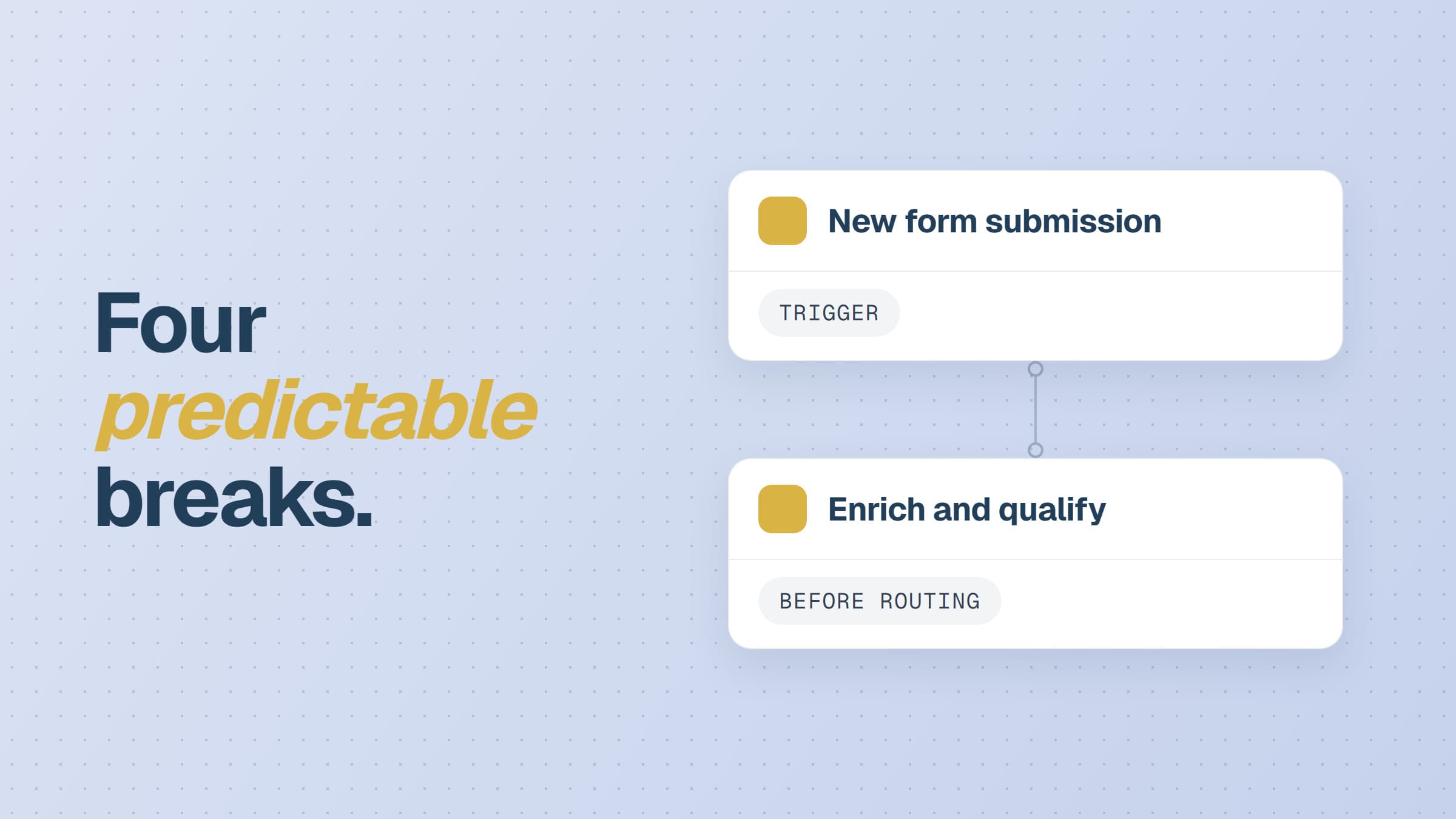
The form submitted. A sync ran, on a schedule. Enrichment queued. A routing rule assigned it to whoever was next, without checking whether that person was in a meeting all afternoon, or whether the account already belonged to someone else. Then a notification landed in a channel with forty other notifications.
Almost all of that is machine time, not human time. Which is the good news: it is the part that can be removed.
Ask why a demo request sat for four hours and nobody says a rep ignored it. They describe everything that had to happen first.
Fast and wrong is not a win
There is one failure mode worth naming, because chasing the five-minute number produces it reliably: replying instantly with nothing useful.
An immediate message that asks a question the person already answered on the form, or that comes from a rep who does not cover their segment, is not speed. It is haste, and it costs you the frame you were trying to win.
The target is a fast reply that knows who they are. That means the enrichment and the qualification have to happen inside the window too, which is the actual engineering problem, and the reason the number is hard to hit rather than the willingness of the team.
A way to measure it honestly
Most response-time dashboards measure from when a lead was assigned. That number will always look fine, because it excludes the part that goes wrong.
Measure from form submission to first human-quality contact. Then look at the worst decile rather than the median, the median hides the ones that fell through, and the ones that fell through are the story.
How Lazure gets inside the window
Almost all of those 42 hours is machine time and queueing rather than a rep ignoring anything. That is the part Lazure removes.
Enrichment and qualification run the moment a form is submitted, as part of the same workflow rather than as a job that catches up later. Routing then checks account ownership first and applies your rule, availability, expertise, capacity or fair rotation, so the lead does not sit waiting for a sync, or go to someone who is out for the afternoon.
For high-intent leads the workflow can show a calendar on the confirmation instead of promising a reply, which removes the reply step altogether.
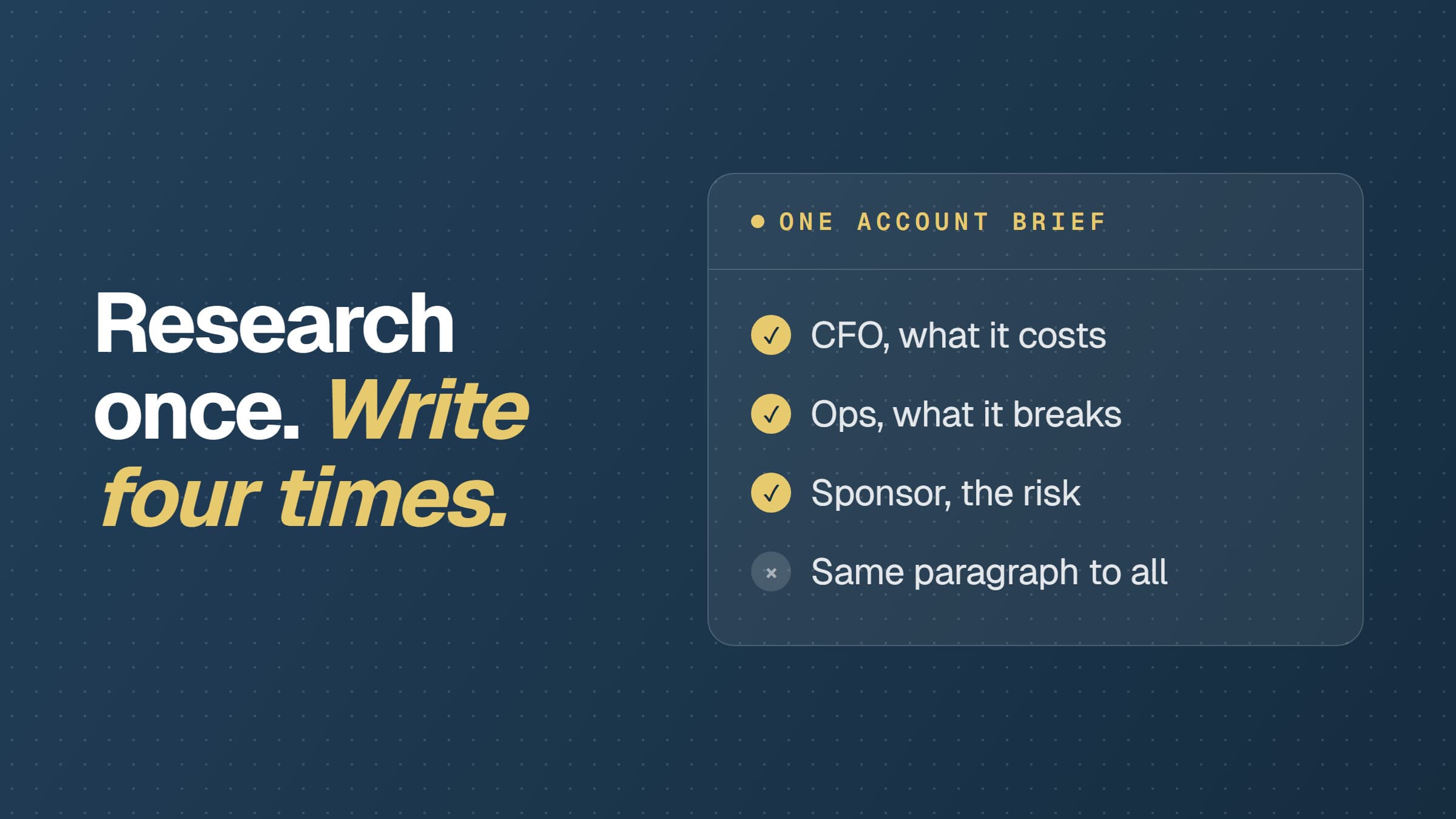
Where a reply is the right answer, the rep is not starting from a name and an email address. The dossier is already attached: who this is, what the company does, why they matter, what they asked for, and everything that has already been said to them. And the rep does not have to write it either. The same AI SDR can draft and send that reply from the same record, so it goes out in minutes with the research already in it, and it stays gated for human approval until you decide it does not need to be. That is what separates a fast reply from a merely quick one.