
Most revenue leaders I talk to suspect their stack is a mess. Very few can say exactly where, and that matters, because you can't fix a feeling.
So here are six signs, each with a test you can run this week without a dashboard, a consultant or a migration. None of them takes more than an hour. Be honest about how many you recognise.
The short version
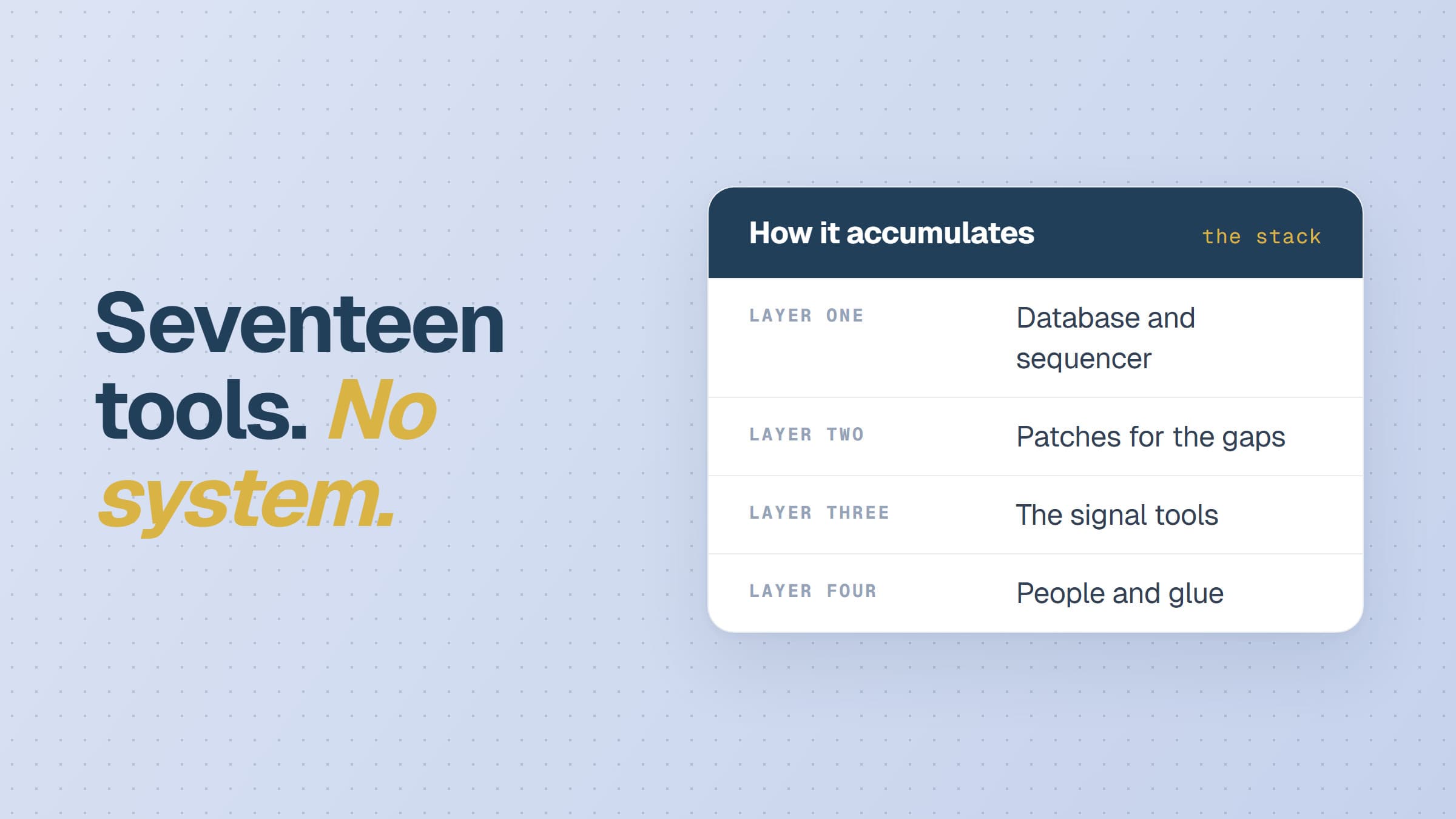
- A Franken-stack is a pile of good tools with nothing owning the space between them.
- You can spot one from six symptoms: rebuilt briefs, collisions, a load-bearing automation, routing nobody can explain, meetings that vanish and signals nobody sees.
- Each sign comes with a test you can run this week.
- One or none is a stack with rough edges. Four or more is a Franken-stack, and no single new tool will fix it.
1. Your reps rebuild the brief before every call
What it looks like: It's 9:58, the meeting is at 10, and the rep has four tabs open: the CRM, the enrichment tool, LinkedIn and the sequencer, assembling a picture the stack already holds in pieces.
The test: Pick a meeting on tomorrow's calendar and ask the rep, without warning, what they know about the person they're about to meet. If the answer starts with a browser tab, this sign is yours.
Why it matters: The brief is the most valuable thing a rep can walk in with, and in a Franken-stack it's rebuilt by hand, by your most expensive people, several times a day. More on this in Seven tools, one lead.
2. Two people have worked the same account in the same month
What it looks like: An existing customer gets a cold first-touch email. Two reps discover they've both been writing to the same company. A prospect mentions, mid-call, the conversation they're already having with your colleague.
The test: Pull last month's new leads and count how many belonged to accounts that already had an owner. Then count how many of those actually went to the owner.
Why it matters: It's embarrassing rather than expensive-looking, so it never makes the priority list. But it erodes trust with exactly the accounts you've worked hardest to win. We broke down why it happens in Inbound doesn't break at volume.
3. One automation is load-bearing, and one person understands it
What it looks like: There's a workflow, in an automation tool or a set of sync scripts, that moves leads between your tools. If it stopped, pipeline would stop. One person built it. When they're on holiday, nobody touches it.
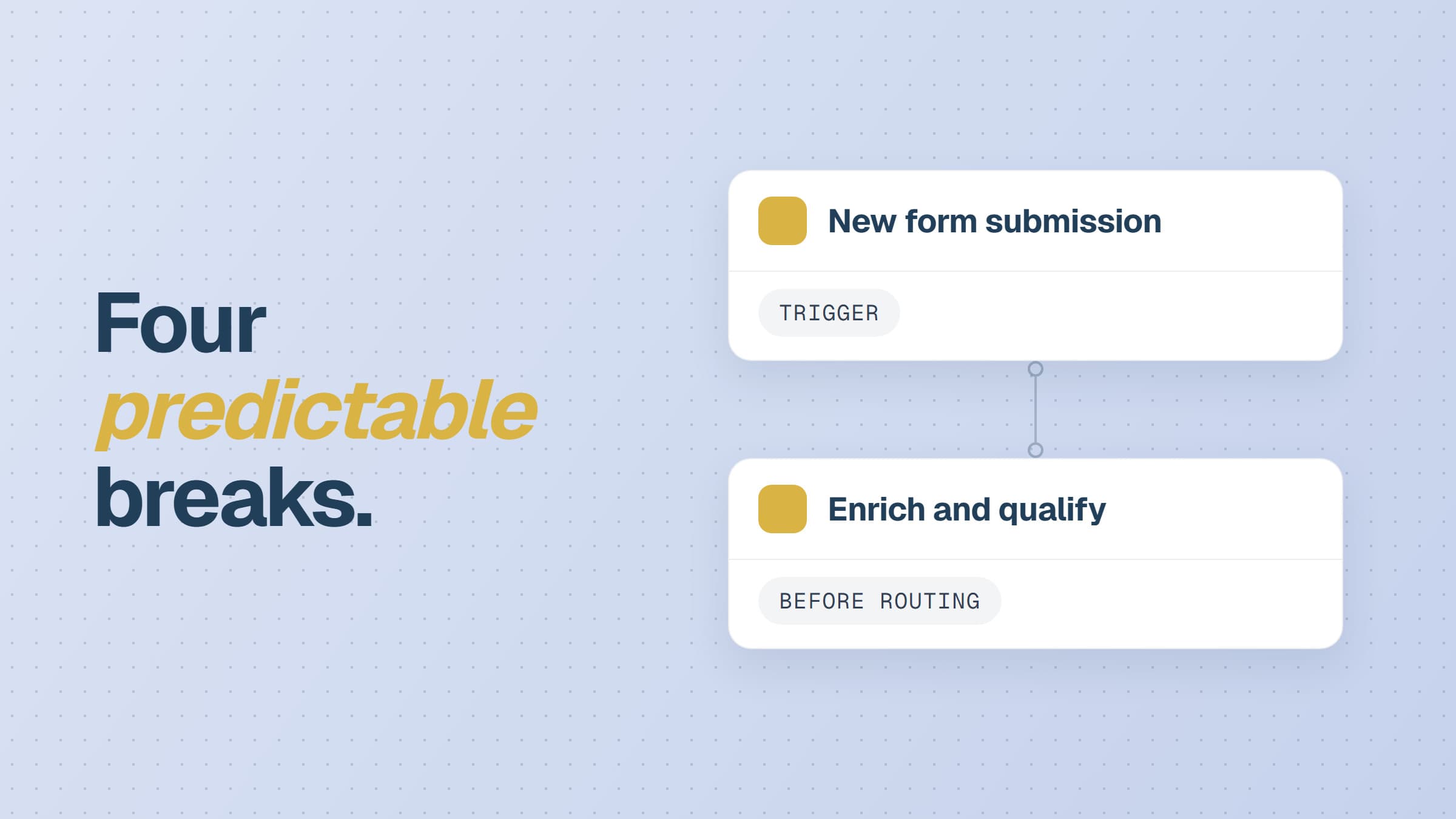
The test: Ask a second person on the team to explain, step by step, what happens to a lead between form submission and a rep's inbox. Notice how long it takes them to find out.
Why it matters: The system that runs your pipeline shouldn't be tribal knowledge. A Franken-stack doesn't fail when someone leaves, it starts degrading, quietly. That's at the heart of whether you need a GTM engineer at all.
Any signal without a name next to it is a signal you don't have.
4. Nobody can explain why a lead went where it went
What it looks like: A strong lead lands with a new rep, a weak one with your best closer, and when someone asks why, the answer is "the router".
The test: Pick five leads from last week and, for each one, find the rule that sent it to its rep. If you need more than one tool to answer, or can't answer at all, this sign is yours.
Why it matters: Routing decides who gets the best chance at revenue. If it can't be explained, it can't be improved, and nobody can tell whether it's fair. Our explainer on distributing a lead covers the rules worth choosing between.
5. A cancelled meeting is the end of the story
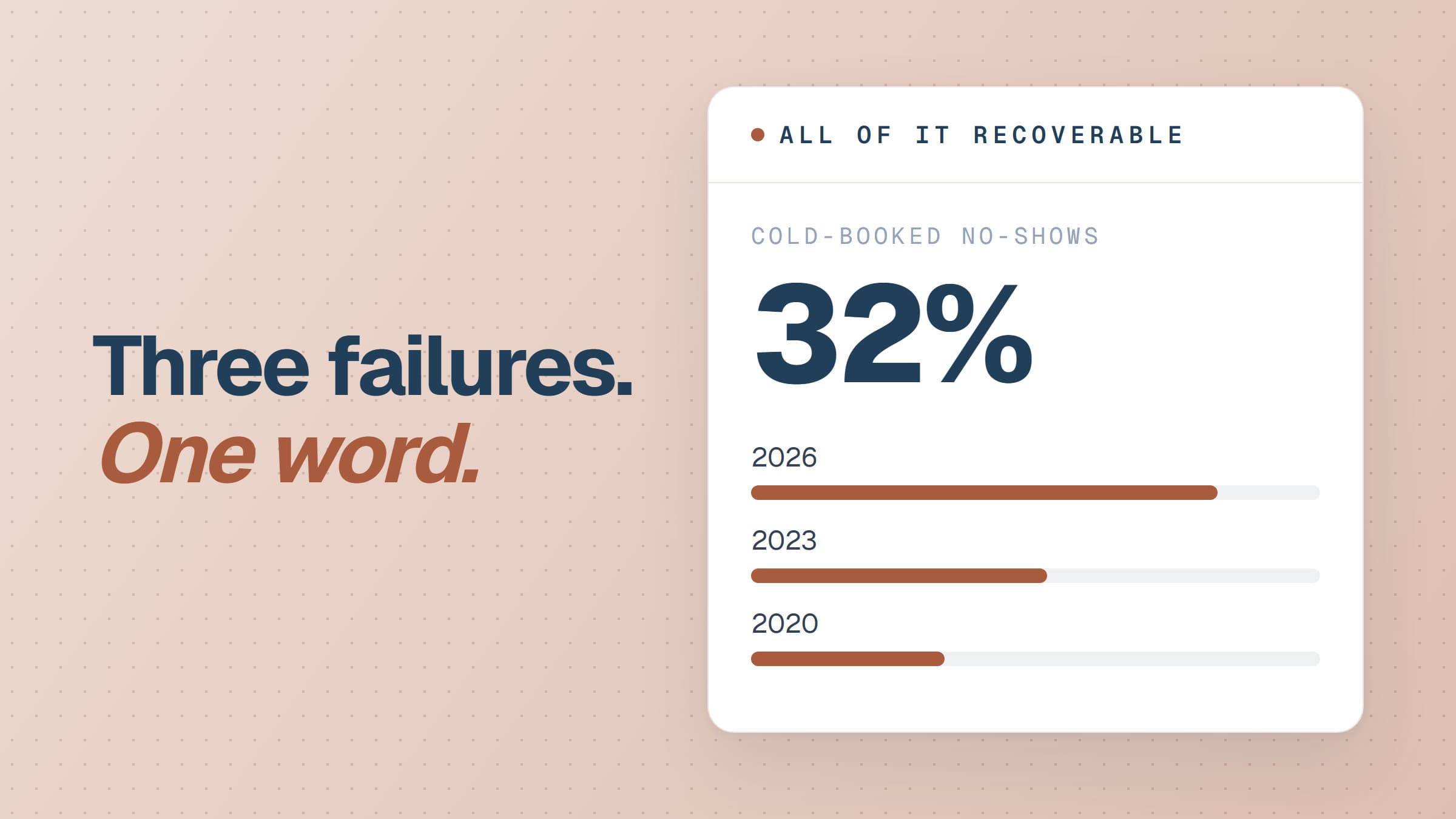
What it looks like: A prospect cancels, or doesn't show, or opens the calendar and never books. The calendar tool logs it. Nothing else happens.
The test: Pull last week's cancelled and no-show meetings and trace what happened to each lead afterwards. Count how many got a follow-up that referenced why they'd booked in the first place.
Why it matters: You already earned their attention once. A dead meeting is a trigger, not an ending, but only if something in the stack is watching for it. We wrote about this in Nobody owns the meeting that never happened.
6. Your best signals arrive in a tool nobody opens
What it looks like: A target account visits your pricing page three times in a week. Someone at an ICP company comments on your founder's post. A user at a perfect-fit company signs up for the free plan. Each signal lands in a different dashboard, and the rep finds out a fortnight later, if at all.
The test: List every buying signal you collect or pay for, and next to each one write who sees it and how fast. Any signal without a name next to it is a signal you don't have.
Why it matters: A signal is worth most while the account is still in market. More on that in what to do about traffic that leaves without a word, and in turning product signups into pipeline.

What your count means
None or one: You have a stack with rough edges. Fix the specific seam and move on.
Two or three: The seams are showing. Each fix will work, and each will add one more rule or automation to maintain. Worth asking whether the next fix should be a patch or a rethink.
Four or more: You're running a Franken-stack. Another tool will add another seam. The fix is structural: one record, every step in order on it, and rules your whole team can read. Our anatomy of a Franken-stack explains how teams end up here, and how the best B2B teams run revenue shows where they go next.
How Lazure approaches this
Each sign above is a seam between tools, and Lazure is built so those seams don't exist. Capture, enrichment, research, scoring, ownership checks, routing, scheduling, sequences, replies and meeting recovery all run on one record. So the brief builds itself before every call, an owned account goes to its owner, and a cancelled meeting starts a follow-up with the full context attached.
Signals land in the same place as everything else. Website visitors, social engagement, product signups and form fills are matched to accounts, scored against your ICP and acted on, by a rep or by the AI SDR, while they're fresh. And the rules are written in plain English, readable by anyone on the team. If you counted four or more, book a demo and we'll walk your stack with you.