
Lazure
ExplainerRouting7 min read

Which lead routing rule should you actually use?

Round robin is the default at most companies because nobody ever chose it. Here is what each of the five rules optimises for, who it quietly penalises, and how to pick one deliberately.

Lead distribution looks like an administrative detail until you look at what it decides. It decides which rep gets the account they have been nurturing for six months. It decides whether the enterprise deal goes to the person who has closed four of them or the person whose turn it happened to be. It decides whether your best closer spends Tuesday on leads that were never going to buy.

Nearly every team runs one of five distribution methods, and most run the first one without having compared it to the other four. Here is what each actually optimises for.

Before any of them: who already owns the account?

This is the step that makes the other five safe, and the one most commonly missing. If a contact from an existing customer fills in your form, no distribution rule should run at all, that lead belongs to whoever owns the account, and sending it anywhere else is worse than sending it slowly.

A distribution rule applied before an ownership check is not routing. It is shuffling.

The same applies to an open opportunity, a lead already in an outbound sequence, or a second person from an account someone is actively working. Check the CRM first. Distribute only what is genuinely unclaimed.

The five methods

01

Round robin

Optimises forSimplicity. Everyone gets the same number of leads, in order, forever.
Quietly penalisesAnyone whose leads are systematically harder. Two reps with identical counts can have wildly different pipelines, and round robin cannot see the difference.
Use it whenYour reps are genuinely interchangeable, same segment, same product, similar tenure. It is a reasonable default for a small, uniform team and a poor one for everybody else.
02

Max fairness

Optimises forEquality of outcome rather than equality of count. It tracks what each rep has actually received over time and corrects for drift.
Quietly penalisesNobody, by design, which is also its limitation. It will keep a struggling rep at full volume because fairness is the only thing it is measuring.
Use it whenCompensation is contentious, or reps have complained that distribution feels rigged. Fairness tracking is the answer to 'why does she always get the good ones', because it produces an auditable record.
03

Availability

Optimises forSpeed to first response. The lead goes to whoever can actually take it now, not on holiday, not at capacity, not already booked solid.
Quietly penalisesReps with open calendars, who will accumulate volume simply for being free. Left unchecked it can load the least busy rep rather than the most suitable one.
Use it whenResponse time is the binding constraint, high-volume inbound, demo requests, anything where the first reply wins. Best combined with a fairness or capacity ceiling.
04

Performance

Optimises forRevenue. Leads go to whoever historically closes that kind of lead, by segment, industry, deal size, or product line.
Quietly penalisesNew hires, who cannot build a track record without receiving leads, and cannot receive leads without a track record. It compounds quickly if nothing counteracts it.
Use it whenDeal sizes vary enough that win rate matters more than volume, and you have enough history for the comparison to mean something. Pair it with a floor for ramping reps.
05

Weighted round robin

Optimises forDeliberate imbalance. Each rep carries a share you set. 40/30/30, or a senior rep on double a junior's load.
Quietly penalisesNobody automatically, but it encodes whatever assumption you put in. A weighting set during a hiring push is still running a year later unless someone revisits it.
Use it whenCapacity genuinely differs, part-time reps, a team lead who also manages, someone ramping. It is the most honest method when the differences are real and known.

How to choose

The question is not which method is best; it is which failure you are least willing to accept. Round robin accepts mismatched leads to guarantee equal counts. Performance accepts an unfair start for new hires to protect win rate. Availability accepts uneven loads to protect response time.

Most teams over a certain size end up combining them: ownership check first, then a rule per segment, with a capacity ceiling underneath so no single rep drowns. That is harder to express in a tool that only offers rotation.

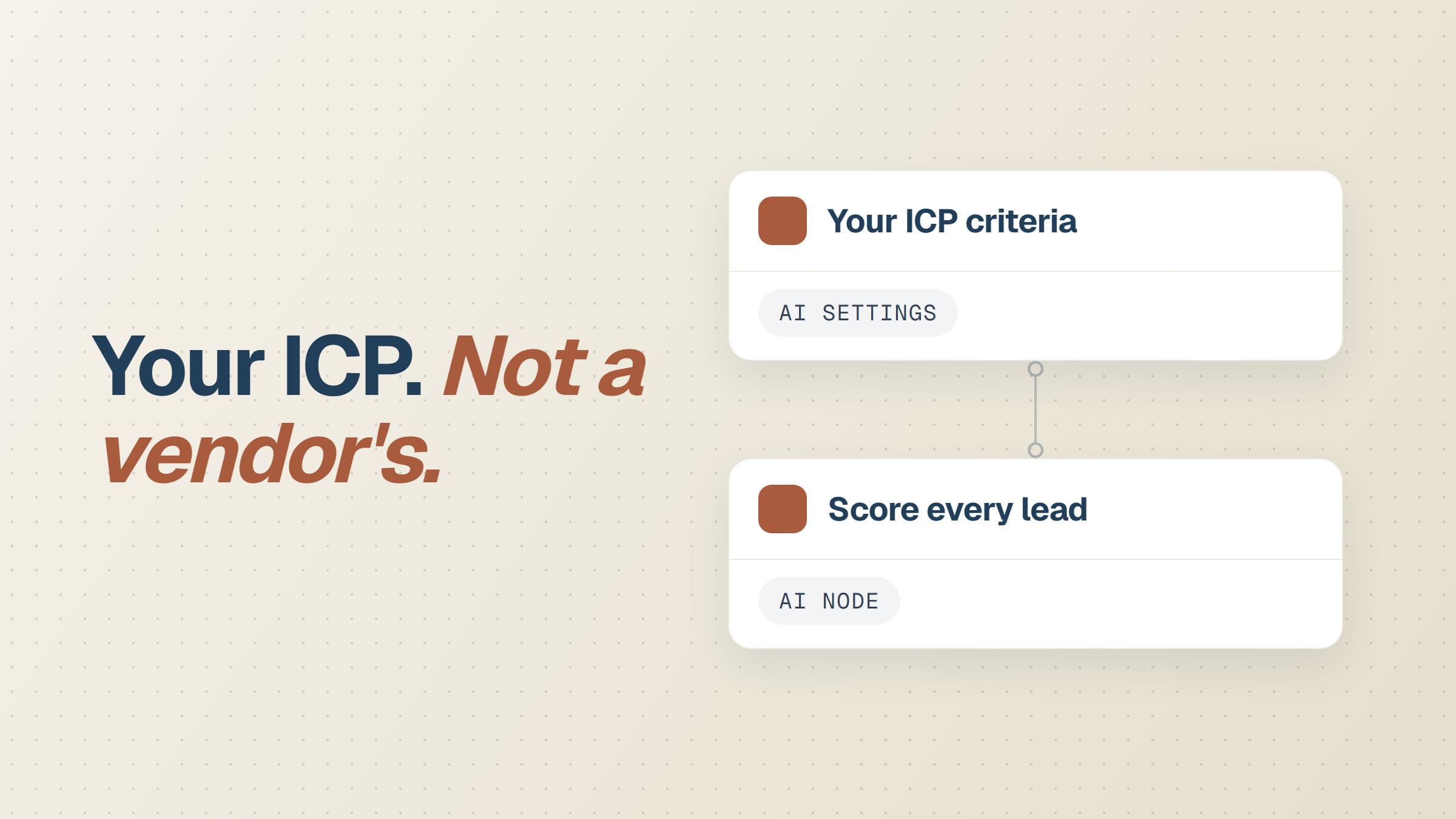
Worth separating two things that get conflated. Distribution decides which rep, out of those eligible. Qualification decides whether a lead should reach a rep at all. A routing rule cannot fix a queue full of leads that were never a fit, that filtering has to happen first, or your fairest possible distribution is just an even spread of wasted time.

The part nobody tunes

Whatever method you pick will keep running unattended. Reps leave, territories change, someone goes on parental leave, a segment doubles. The distribution rule does not notice any of it unless it can read availability, capacity and ownership as live signals rather than as fields somebody remembered to update.

If you take one thing from this: go and look at what your CRM is currently doing with an inbound lead. Most people are surprised, and almost nobody finds an ownership check in front of it.
Lazure checks ownership before any routing rule runs

All five distribution rules, plus fairness tracking and capacity ceilings, applied only after Lazure has confirmed the account does not already belong to someone.

See Lazure routing