
I've sat in the QBR where the VP of Marketing says "we crushed our MQL number" and the VP of Sales says "our inbound leads are low-quality," and they are both holding the same spreadsheet. If you've run revenue for more than one cycle, you already know how that meeting usually ends: a headcount ask.
Give sales more reps. Give SDRs more tooling budget. Buy another seat, another sequencer, another "AI-powered" bolt-on that promises to fix the thing nobody can quite name.
I know because I have been in these meetings, before I figured out I was solving the wrong problem.
Here's what actually happens when inbound doubles: response times slip on the leads that mattered and hold steady on the ones that didn't. A prospect fills out a form and gets an email from a stranger who clearly hasn't read it. Half the booked meetings quietly evaporate and nobody rebooks them. And the rep who does show up walks into the call with a name, an email address, and absolutely nothing else.
None of that is a capacity problem. You cannot hire your way out of it. It happens in the gap between a lead arriving and a human actually seeing it, a gap that in most stacks is four or five tools wide, where nothing is technically anyone's job.
The short version, for the people who forward this to their CRO
- Volume was never the failure mode. The handoff between capture and rep is.
- All four failures happen in the minutes between form submission and a human noticing.
- Three of the four never show up in your dashboards, because nothing logs a lead that was quietly mishandled, every tool in the chain reports success.
- Not one of them gets fixed by hiring another SDR. I've tried, turns out you can fix it with an AI one instead.
1. The lead gets qualified after it's already assigned
Walk your own stack for a second.
Form fires. Lead lands in the CRM. A routing rule assigns it (sometimes in under a minute). Enrichment runs after that, sometimes hours later, sometimes the next business day, sometimes never.
That ordering guarantees two things happen at once. Your reps burn cycles on leads that were never a fit, because nothing knew they weren't a fit at the moment of assignment. And your genuinely good leads, the ones that should've jumped the queue, sit in the same undifferentiated pile as everyone else, because the fields that would have flagged them hadn't arrived yet when the queue was built.
The 2026 benchmark data backs up what every SDR manager already feels in their gut: median MQL-to-SQL conversion is sitting around 13%. Read that plainly, roughly seven of every eight "qualified" leads never get accepted by sales. Marketing didn't suddenly get worse at generating demand. The top-quartile teams in the same studies are now rejecting close to 30% of MQLs at the scoring layer, before an SDR's name ever touches the record. They moved qualification earlier. Everyone else is still qualifying leads that already have an owner.
What it looks like on your team: Reps say quality tanked. Marketing's dashboard says volume and conversion are flat. Both of you are right, and you'll keep having this argument every quarter until someone fixes the sequence instead of the blame.
What to do: Move enrichment and qualification in front of assignment and stop treating enrichment as a static database pull.
Here's the test I use now: if a rep can be assigned a lead before anything has been established whether it's a fit, your order is backwards.
The moment a form is submitted, Lazure runs enrichment on the lead and the account, not a cached record from three enrichment cycles ago, then it checks the lead and account ownership to avoid any ownership fight or confusion. It then can route the leads based on your routing rules or form data selection criteria and display the calendar of the selected sales person. Lazure can also route the leads based on simple round robin or other criteria such as performance, availability, max fairness, or weighted round robin algorithms. Lazure can also research, score, and qualify these leads against your actual ICPs. So the score exists before a name gets attached to it, and your reps stop spending Tuesday afternoons on companies that were never going to buy.
Where the time actually goes
0:00
Form submitted
Lead exists. Nothing knows who they are yet.
0:02
Routed
Assigned before anything qualified them.
+1 day
Enriched
The fields that would have flagged them arrive now.
+2 days
First reply
The window closed on day two.
2. Nobody checks who already owns the account
Round robin doesn't know the person who just filled out your form works at an account one of your AEs has been nurturing for six months. It doesn't know they're already three steps into an outbound sequence. It doesn't know that a rep on a different team had a call with someone at that same company last Tuesday. It just does what you told it to do and hands the lead to whoever's next in line.
What it looks like: An existing customer gets a cold, robotic first-touch email. Two reps show up on the same account in the same week, both convinced they own it. Somebody discovers mid-call that the prospect has been having an entirely different conversation with a colleague of theirs.
Why it never gets fixed: Because it's embarrassing, not expensive-looking. Nobody writes a ticket that says we made a customer feel like a stranger to us. It never makes the list. It just quietly erodes trust with the accounts you've worked hardest to win.
What to do: Put an ownership check in front of every distribution rule, full stop. If the account already has an owner, the lead shouldn't be eligible for distribution at all. Lazure checks HubSpot, Attio, or Zoho before any routing rule runs, not after.
A distribution rule that fires before an ownership check isn't routing. It's shuffling, and your customers can tell the difference even if your dashboard can't.
3. The calendar gets offered, and then nothing happens when they don't book
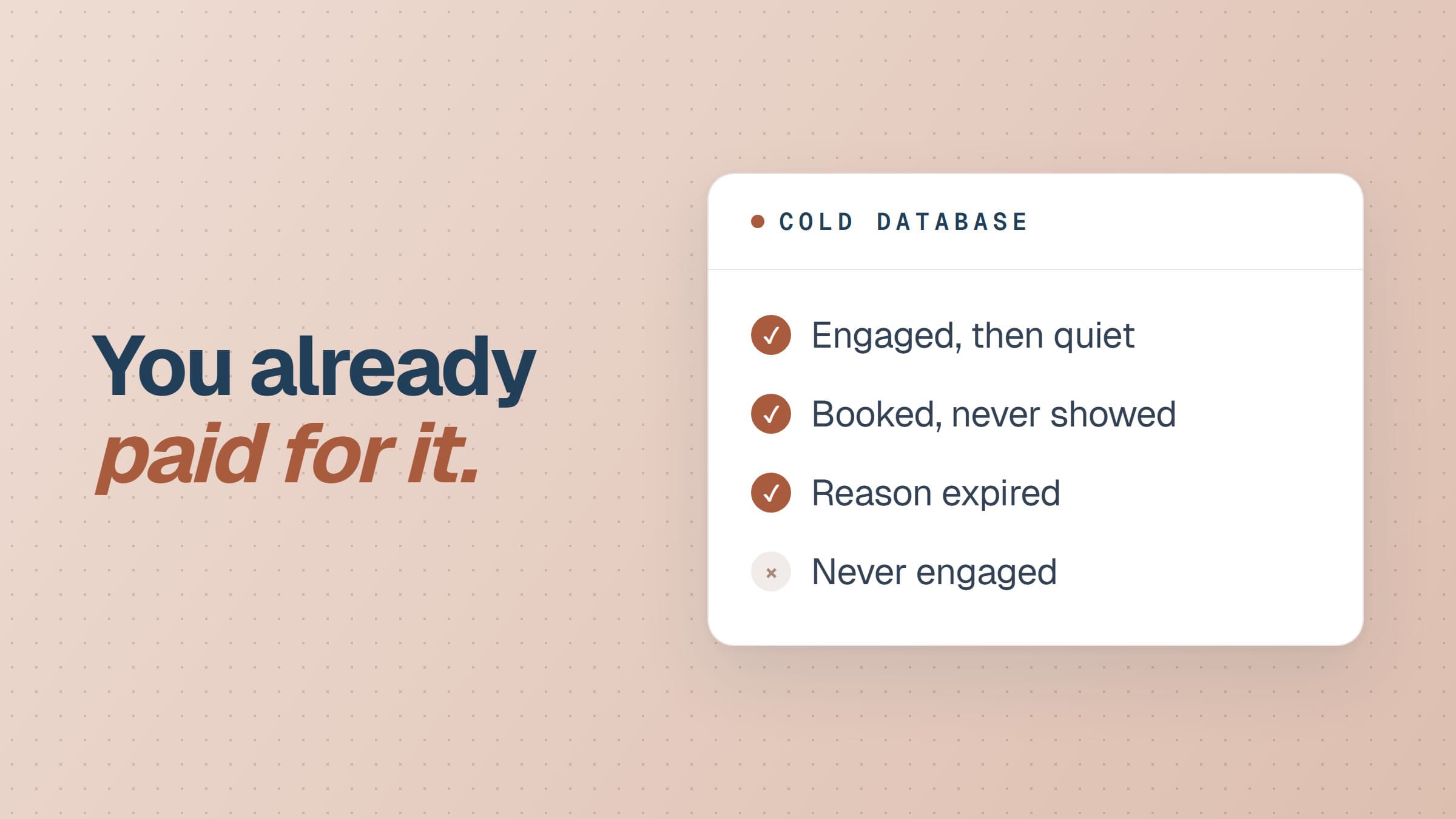
Every stack has a well-worn path for the lead who books a slot and shows up. Almost none has a path for the lead who opens the calendar, stares at it, and closes the tab. Or books and ghosts.
That second group is bigger than most revenue leaders want to admit, and it's the most expensive failure on this list, because you already spent the full acquisition cost to get them there. The only thing missing is the follow-up you never sent.
The 2026 numbers are worth sitting with, because they disagree with each other for a good reason. Median B2B demo show rates land around 55–65%, while a separate analysis of several thousand meetings found no-shows closer to 6%. Those aren't two measurements of the same thing. A demo requested off your pricing page and a meeting an SDR pried out of a cold call are different animals wearing the same calendar invite. Zoom out to cold-booked meetings specifically, and the no-show rate has climbed from roughly 18% in 2020 to around 32% now. Buyers are busier, more self-directed, and (this is the part that should worry you) increasingly comfortable doing their own research before they'll give you real calendar time at all.
What it looks like: A calendar full of holes nobody treats as a pipeline event. The meeting disappears, the CRM logs nothing, and the lead never hears from you again. And all this, after you have already paid to get their attention once.
What to do: Treat a dead invite as a trigger, not an ending. The re-engagement has to carry the original context: who they are, what they asked for, what's already been said, or it reads as a form letter, which is worse than saying nothing. Lazure fires that follow-up automatically, with the full lead record attached.
The moment a meeting expires or gets cancelled Lazure instantly fires a re-engagement workflow to get those leads to rebook a slot with you and answer the questions they might have. Lazure follows up with the leads with persistence and personalization that is difficult for humans to match at the scale and speed it does so. The entire conversation and engagement is handed over to the designated sales person so that your sales can recover dead meetings without lifting a finger.
This is where I'd also point at the two speeds this actually needs to run at, because most teams only build for one. For the lead who isn't ready (the edge case), the "just researching" form fill, the one who won't book today no matter what you send, Lazure's AI SDR takes over the nurture and keeps working it against whatever rules you've set, until they warm up and book a meeting on their own. No rep cycles spent chasing someone who isn't there yet.
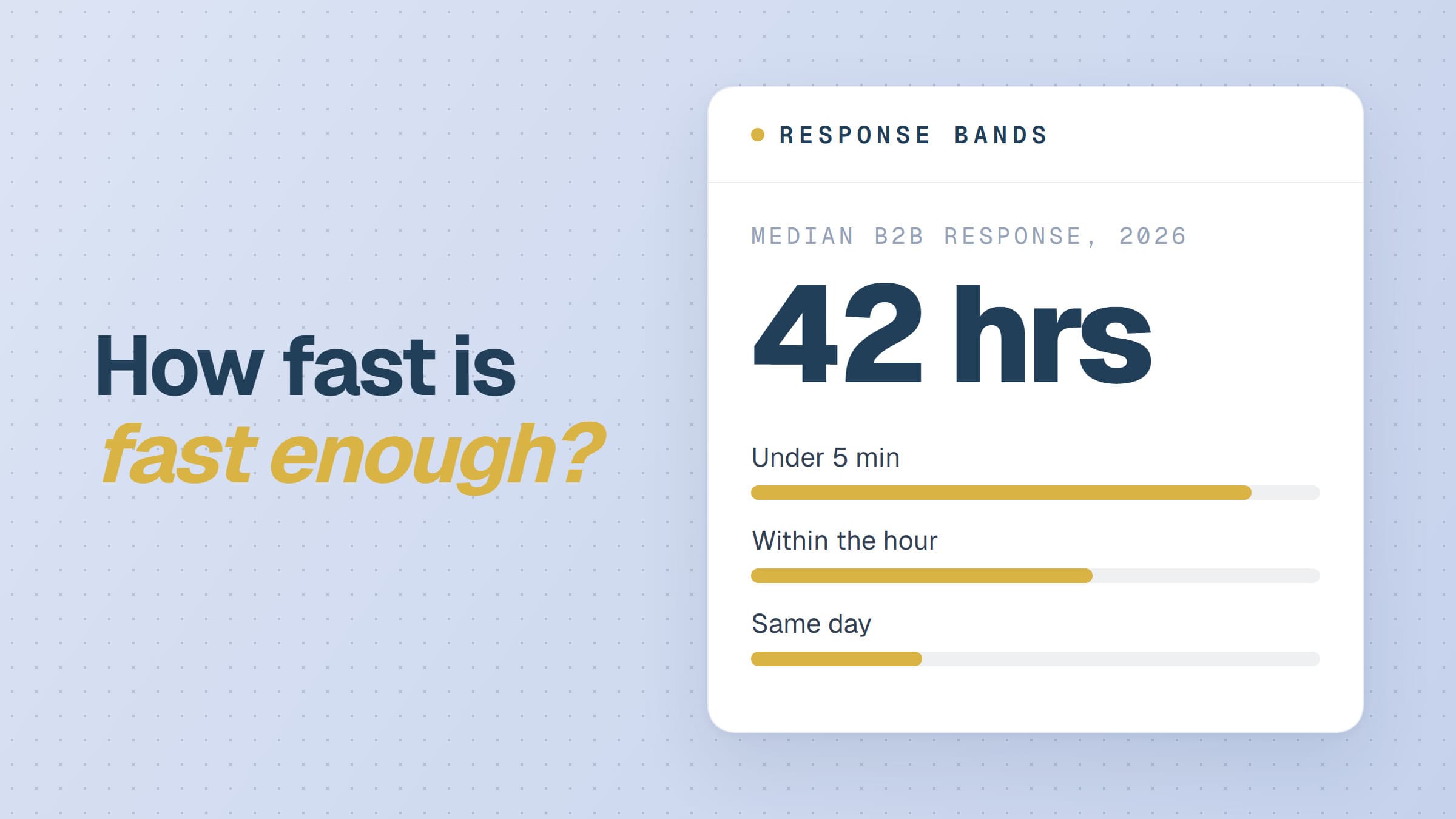
And for the lead who came in hot, a demo request, a "talk to sales" form, anything that signals real intent, the same AI SDR responds instantly, not after it's sat in a queue waiting for a human to notice it. That's the actual mechanism behind getting response time under five minutes. Not a faster Slack alert. A rep who isn't the bottleneck in the first place.
4. The rep shows up without the context your stack already has
This is the one that costs the most and shows up in exactly zero reports. I only really understood it the day I sat in on a rep's calls for an afternoon and watched them build the same brief, from scratch, five times before lunch.
By the time a meeting starts, your stack already knows a lot about the person dialing in. The form captured what they asked for. Enrichment told you who they are and what the company does. Something logged which pages they read and when. The sequencer knows every message that's already gone out, including the automated ones.
And the rep, at 9:58, has a name, an email address, and four browser tabs open.
Why it happens: Not because the data's missing, but because it's scattered across five systems and none of them holds enough on its own to write a brief. Assembling it means a human visiting all five, which is exactly the work that gets skipped on your busiest meeting days, which are, not coincidentally, the days it matters most.
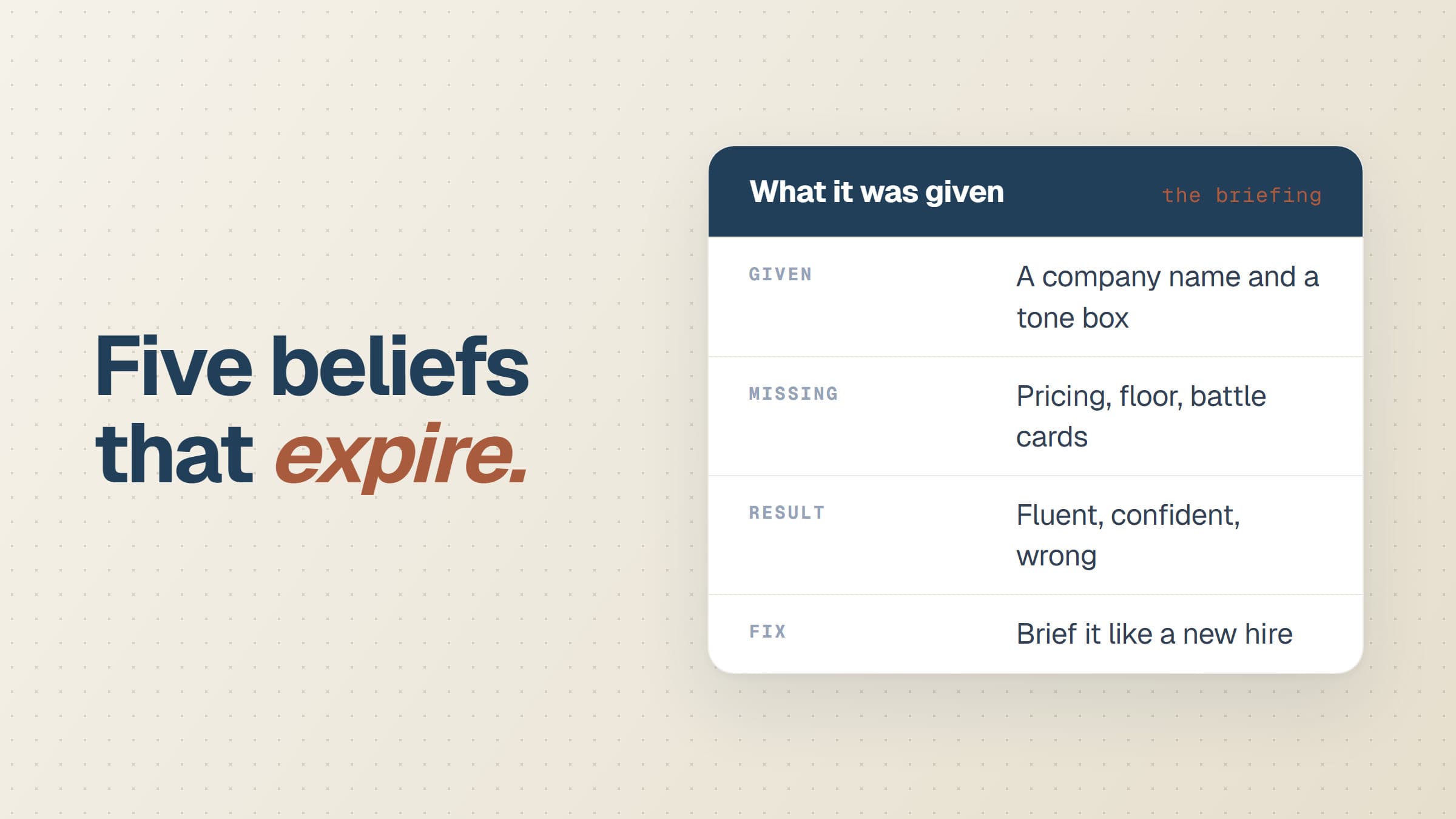
What to do: The brief has to be assembled by whatever system holds the whole record, and it needs to be waiting before the call, not requested in a panic after it starts. Five questions is enough: who they are, why now, what they asked, what's already been said to them, and what to avoid saying.
Because Lazure holds capture, enrichment, qualification, routing, and every message on a single record, that brief builds itself and is sitting there when the rep opens the meeting. No tab-hopping required.
And it's not five fields pulled out of a table pretending to be a brief. The AI SDR that's been talking to this lead is drawing on a real knowledge base of your company, not a single merge-tag personalization that falls apart the second someone asks a real question, to actually answer what they wanted to know. So it hands off to a rep based on the rules and criteria you set, at the moment the conversation earns it, not on a timer. What the rep inherits isn't "here's what we scraped about them." It's "here's the conversation that already happened, here's what they already know, here's why they're ready now."

Why none of this shows up in your reporting
Here's the thread that ties all four together, and it's worth saying plainly because it took me longer than it should have to see it: not one of these is a volume problem, and not one gets fixed by hiring. They're seam failures, things that fall through the joins between tools that are each, individually, doing exactly what they were built to do.
Which is exactly why they're invisible. The form reports a submission. The router reports an assignment. The calendar tool reports an invite sent. The sequencer reports a sequence run. Every single tool in the chain reports success. Nothing in that chain owns the outcome, so nothing reports the failure, only you feel it, quarter after quarter, as a pipeline number that never quite adds up.
Here's a gut-check you can run tomorrow morning, no dashboard required: pick a meeting on a rep's calendar, walk over, and ask them, without warning, what they know about the person they're about to talk to. If the honest answer sends them to a browser tab, the brief isn't being assembled anywhere. It's being rebuilt from scratch, by your most expensive people, several times a day, every day, and you're paying for it whether or not it shows up on a line item.
If any of this felt uncomfortably familiar, that's not a sign your team is bad at this. It's the normal, predictable outcome of assembling a stack one tool at a time, each one bought to solve a real, specific problem, none of them bought to own the space between problems. Almost every team ends up here. The fix isn't another tool bolted onto the chain. It's closing the joins the leads are currently falling through.
How Lazure closes the four gaps
Each failure above is a seam between tools. Closing it is less about adding capability and more about redrawing where one system ends and the next one begins, and in Lazure's case, putting an AI SDR in that gap instead of leaving it empty.

A submitted form doesn't go straight to a routing rule. Lazure runs real-time AI research on the lead and account first, scores and qualifies against your ICP criteria, and checks ownership against HubSpot, Attio, or Zoho, all before any distribution rule fires. So the score exists before anyone gets assigned, and an existing customer or lead never lands on a stranger again.
Every inbound lead gets met at the speed it deserves. The ones who came in hot (a demo request, a "talk to sales" form) get an instant response from the AI SDR, pushing your reply time under five minutes. The ones who aren't ready yet get worked into a nurture, on your rules, until they warm up and book on their own. And a cancelled, missed, or expired meeting isn't a dead end, it's a trigger, with a re-engagement that goes out automatically, full context attached.
None of it runs on templated personalization. The AI SDR is drawing on a real knowledge base of your company to actually answer what a prospect asks, and it hands it off to a rep based on the rules and criteria you set, not a timer. So because capture, research, qualification, routing, nurture, and every message live on one record, the brief a rep opens before a call isn't reconstructed under pressure at 9:58. It's already sitting there, the conversation, the context, the reason they're ready now.
You've bought the tools. You've hired the team. The thing costing you pipeline was never in either of those line items, it's in the gap between them. Lazure is what sits in that gap now.