
Product-led growth gives sales something no outbound motion can buy: a record of what the person actually did. Not what they said in a form, not what a data vendor inferred, what they set up, invited, connected and returned to.
And most teams throw it away by treating signup as the trigger and emailing everybody.
The short version
- A signup is not a lead. It is somebody trying something.
- The company behind the domain decides whether sales should be involved at all.
- What they did in the product beats any firmographic in predicting who is worth a call.
- Reaching out too early is the one mistake PLG users remember.
The first mistake
A signup is not a lead. It is a person who wanted to try something. Treating every signup as a sales opportunity is how PLG companies teach their users to ignore them.
PLG users have chosen a self-serve motion deliberately. Many of them will convert without ever speaking to anyone, and a sales email on day one interrupts exactly the process you built. The ones who need a human are a minority, and the whole exercise is finding them without disturbing everyone else.
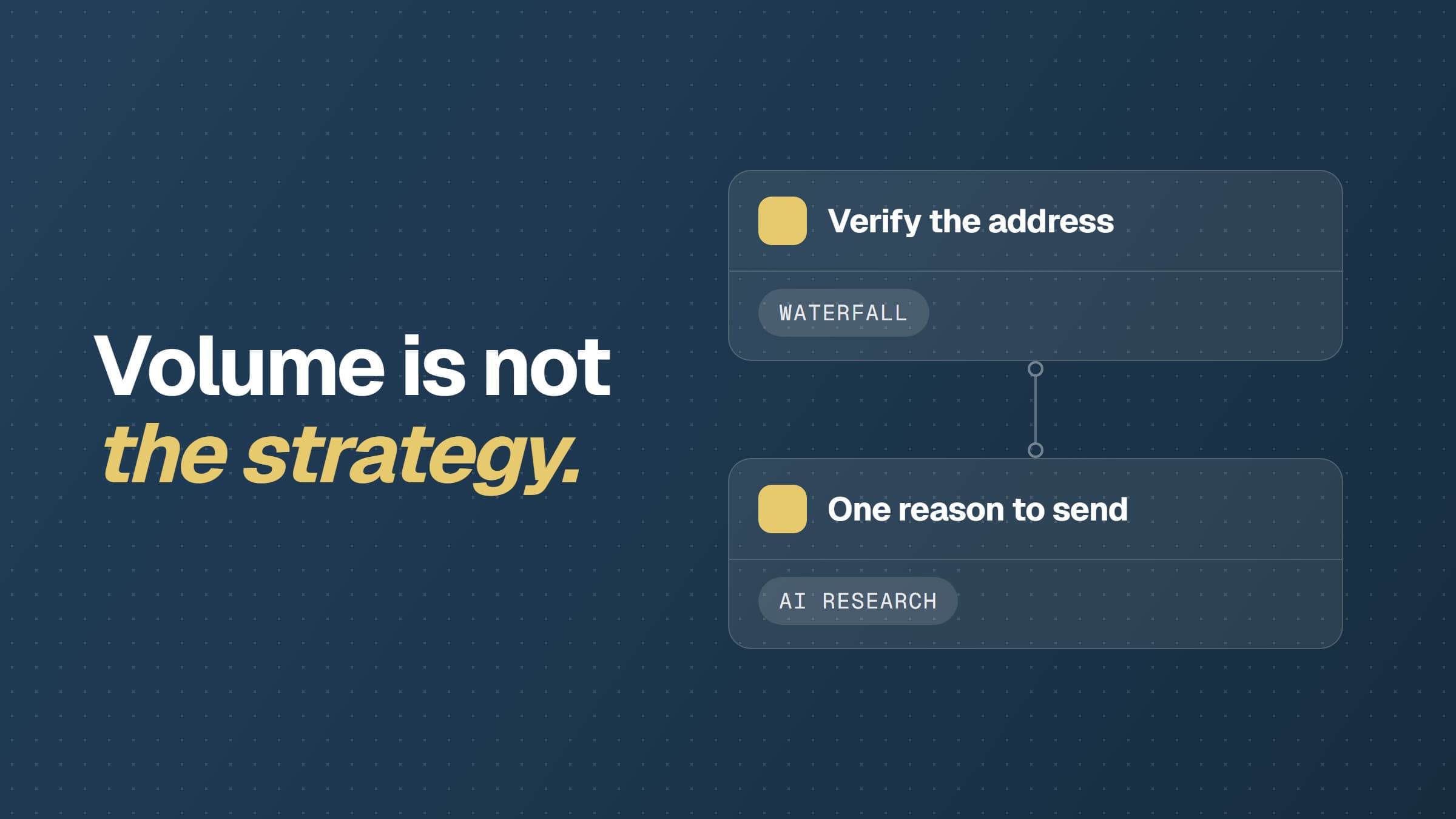
The measure of a good PLG sales motion is not how many signups get contacted. It is how rarely the wrong ones do.
Find the company behind the email
The company matters more than the person. A personal email address on a free plan tells you very little. The domain behind it, and the company behind the domain, tells you whether this is worth a human at all.
This is the first useful filter and it is entirely automatic. A signup from a company with two hundred staff in your target market is worth a different response from one with four, regardless of what either of them does next. Enrichment at signup, before anything else, is what makes that distinction possible.
It also catches the cases that would otherwise embarrass you: someone signing up from a company that is already a customer on another team, or an existing opportunity, or a competitor.

Which actions actually mean something
Behaviour beats firmographics here. In PLG you have something outbound never has: what they actually did. A user who invited two colleagues and connected a data source is a stronger signal than any company size band.
The actions worth triggering on share a property: they cost the user something. Inviting a colleague spends social capital. Connecting a data source takes effort and permission. Hitting a plan limit means they used the thing enough to run out of it. Reading the pricing page from inside the product is about as close to a raised hand as PLG gets.
Logging in is not a signal. Neither is completing onboarding, which most people do out of politeness to the interface.
Combine the two axes and you get a small, defensible list: right kind of company, doing the kinds of things that precede a purchase. Everything else stays in the self-serve motion where it belongs.
The measure of a good PLG sales motion is not how many signups get contacted. It is how rarely the wrong ones do.
What the message should be
Once you have decided someone is worth contacting, the tone problem is real. They did not ask to hear from sales, and they can see that you can see what they did.
The version that works is specific, useful and offers to remove a problem they already have. They hit a limit; you know what the limit is for. They invited three colleagues; team setup has a known sharp edge. The message earns its place by being about the thing they were doing, not about a meeting.
The version that fails opens with a congratulation on signing up and asks for thirty minutes.
And there has to be a rule for silence. Someone who does not reply to a useful message is telling you they want the self-serve path. Take the answer.
Wiring it up
Mechanically this is a webhook and a set of rules. Your product fires an event on the actions you decided matter. The user gets enriched, the company scored, the record checked against the CRM so no existing customer gets prospected. High-fit accounts doing high-signal things go to a rep with the context attached. Everything else stays in product-led nurture.
The thing that makes it work is not the automation, though. It is having decided, in advance and in writing, which signals justify interrupting somebody. Most teams never make that decision, so the default becomes everyone.
How Lazure wires this up
Everything here depends on a decision made in advance about which signals justify interrupting somebody. Lazure is where that decision gets encoded.
Your product fires a webhook on the actions you chose. The user and the company are enriched at signup, scored against your ICP, and matched to your CRM so existing customers and open opportunities are suppressed before anything sends.
An AI transform node scores expansion or conversion readiness from the combination of company fit and in-product behaviour. High-signal accounts route to a named rep with the product context attached; everything else stays in a product-led nurture sequence. Nobody has to watch a dashboard for it.