
Somewhere in the last two years, GTM engineer became the hire every ambitious revenue team wanted. It's easy to see why. Look at the B2B teams running revenue best and you'll usually find one: someone technical enough to wire enrichment, scoring, routing and outreach together, and commercial enough to know why it matters.
I'm not here to argue against the role. Good GTM engineers are some of the most valuable people in a revenue org. I'm here to ask a narrower question before you open the req: how much of the job you're hiring for is strategy, and how much of it is glue?
The short version
- GTM engineers exist because the best teams built their revenue systems out of many tools, and somebody had to join them.
- The job splits in two: designing how revenue should run, and keeping the tools connected. Only the first needs a rare hire.
- When the system lives in one person's automations, it breaks when they leave.
- If the tools didn't need joining, you'd hire for judgement rather than plumbing, and anyone on the team could run the system.
Why the role exists at all
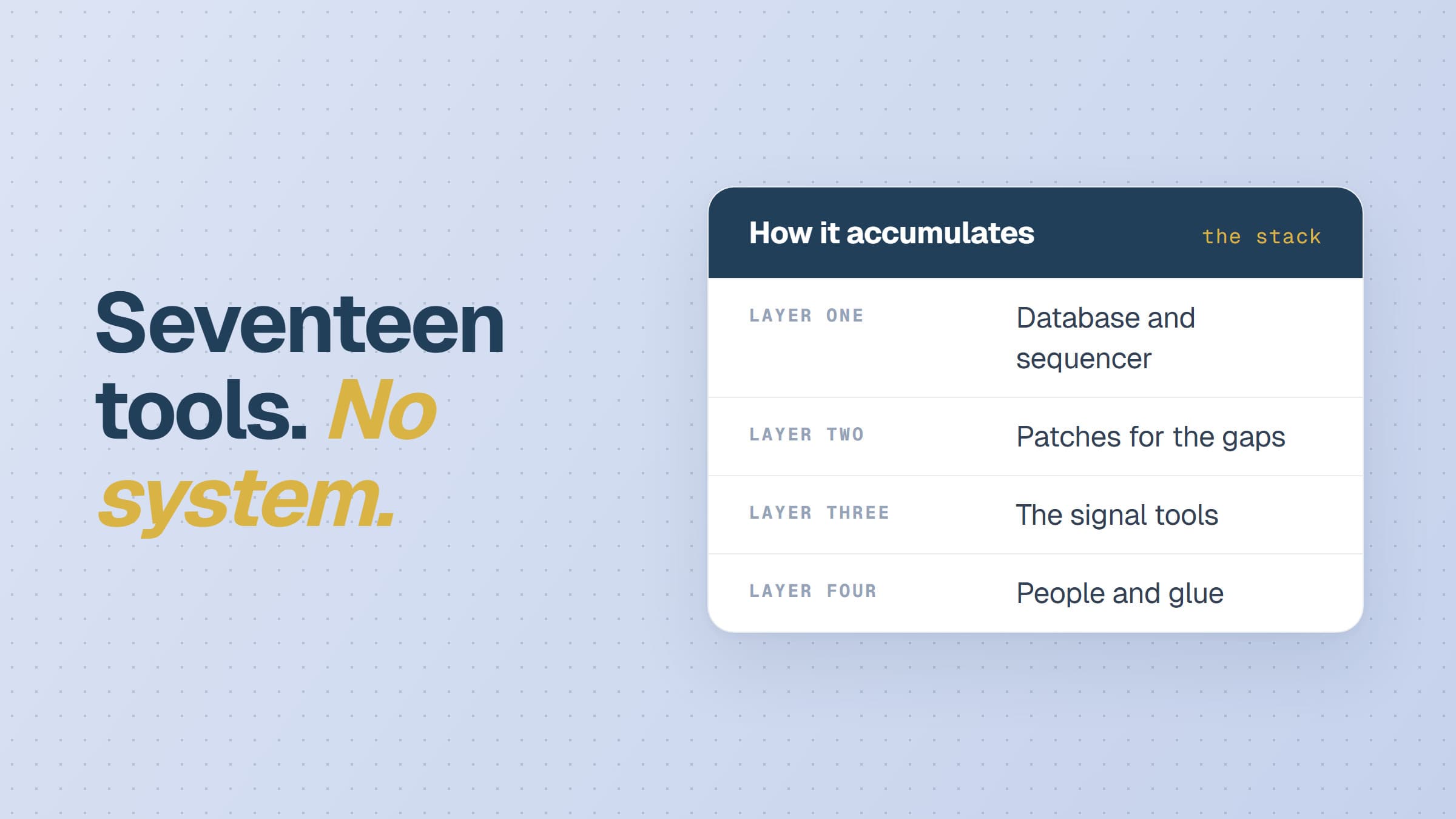
The GTM engineer is a direct product of the Franken-stack. When your revenue system is a contact database, several enrichment providers, a sequencer, a router, a scheduler, a form tool, an intent feed and a CRM, somebody has to make them behave like one thing. That somebody writes the workflows, maps the fields, builds the scoring, maintains the routing, and fixes it all when a vendor changes something upstream.
The best teams hired for this early, and it's a large part of why their systems work. It's also why those systems took years.
What the job actually is
Ask a GTM engineer to describe their week and you'll usually hear two different jobs.
The strategy half
Deciding who the ICP really is and how to recognise it in data. Choosing which signals matter and what should happen when each one fires. Working out the order a lead should move through, what counts as qualified, who should own which accounts, and when a human needs to step in. This is judgement work, and it's genuinely hard.
The plumbing half
Building the automation that moves a record from the form tool to enrichment to the router. Writing sync scripts. Patching a field mapping after a vendor update. Rebuilding a list because one provider's data went stale. Working out why a lead went to the wrong rep on Tuesday. This is skilled work too. But almost all of it exists because the tools don't share a record.

Hire for judgement, not plumbing. The plumbing is a symptom of the stack, not a job your revenue needs done.
The risk nobody puts in the job description
When the plumbing half is done well, it becomes invisible, and that's exactly the problem. The logic that runs your pipeline ends up living in automations that one person built and one person understands.
When they go on holiday, nobody touches it. When they leave, the system doesn't stop. It starts degrading, one silent failure at a time, until a quarter later someone asks why inbound pipeline dipped and nobody can trace it. It's one of the six signs of a Franken-stack for a reason.
When you should hire one
There are good reasons to hire a GTM engineer, and it's worth being clear about them.
- Your data is unusual: a niche market, proprietary sources, or signals no packaged tool can read.
- You're building revenue motions nobody has packaged yet, and you need someone to invent them.
- You're at the scale where the strategy work alone is a full-time job.
In each case you're hiring for the strategy half. That's the half worth paying for.
When you probably shouldn't
If the job description is mostly about connecting tools, maintaining syncs, building lists and keeping routing alive, you're about to hire someone to hold your Franken-stack together. They'll do it well, and the system will be exactly as fragile as before, with one more person it depends on.
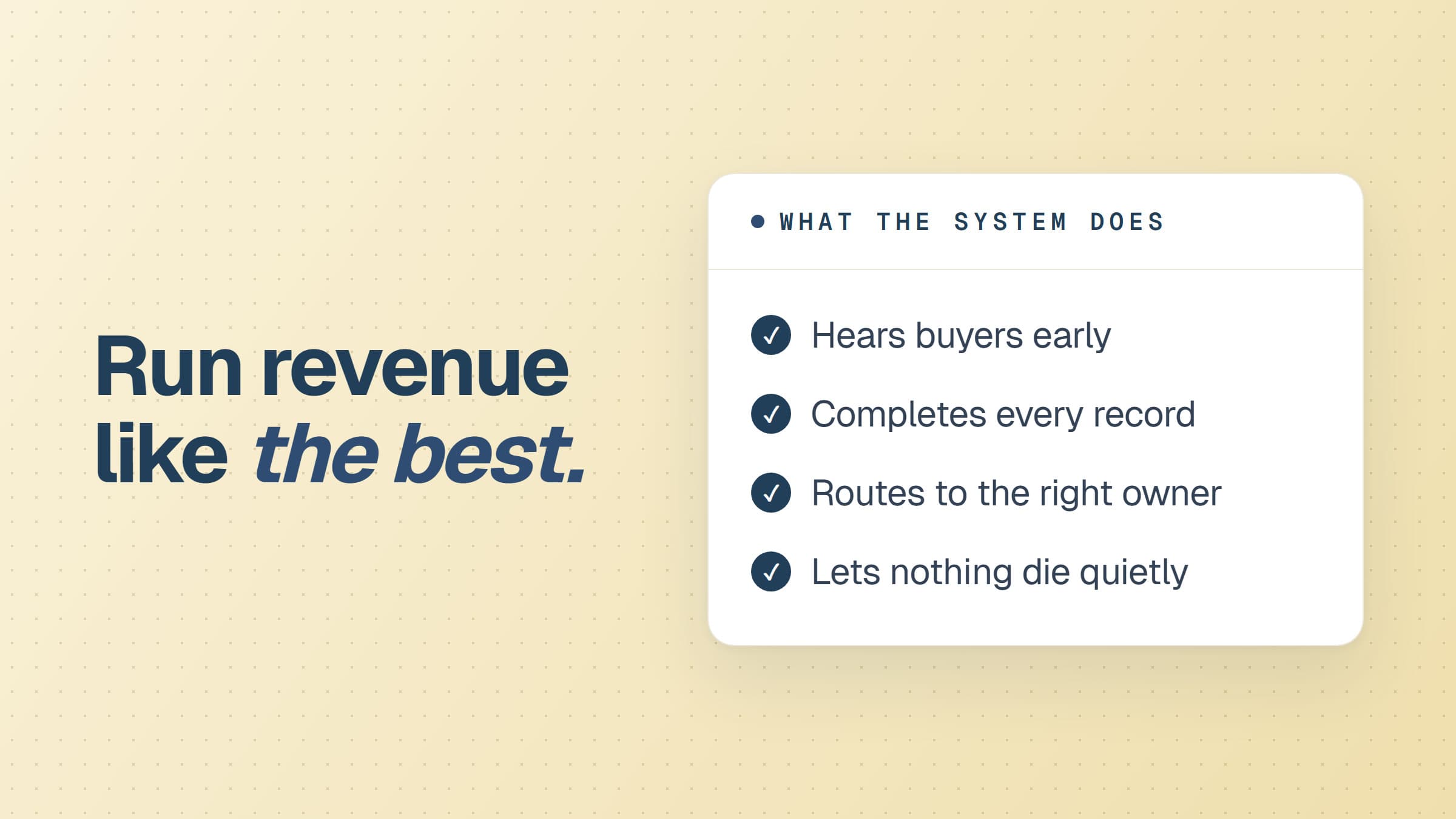
The better question is whether that work needs doing at all. If enrichment, research, scoring, routing, scheduling and outreach ran in one system, on one record, most of the plumbing half would disappear, and the strategy half could be done by the revenue leader and the team you already have.
What it looks like when nothing needs joining
The shift that makes this possible is that a revenue workflow can now be described in plain English instead of wired. When a target company visits the pricing page, enrich it, score it against the ICP, alert the owner and start a sequence. That sentence used to be a project for a GTM engineer. In a system where every step shares one record, it's a sentence.
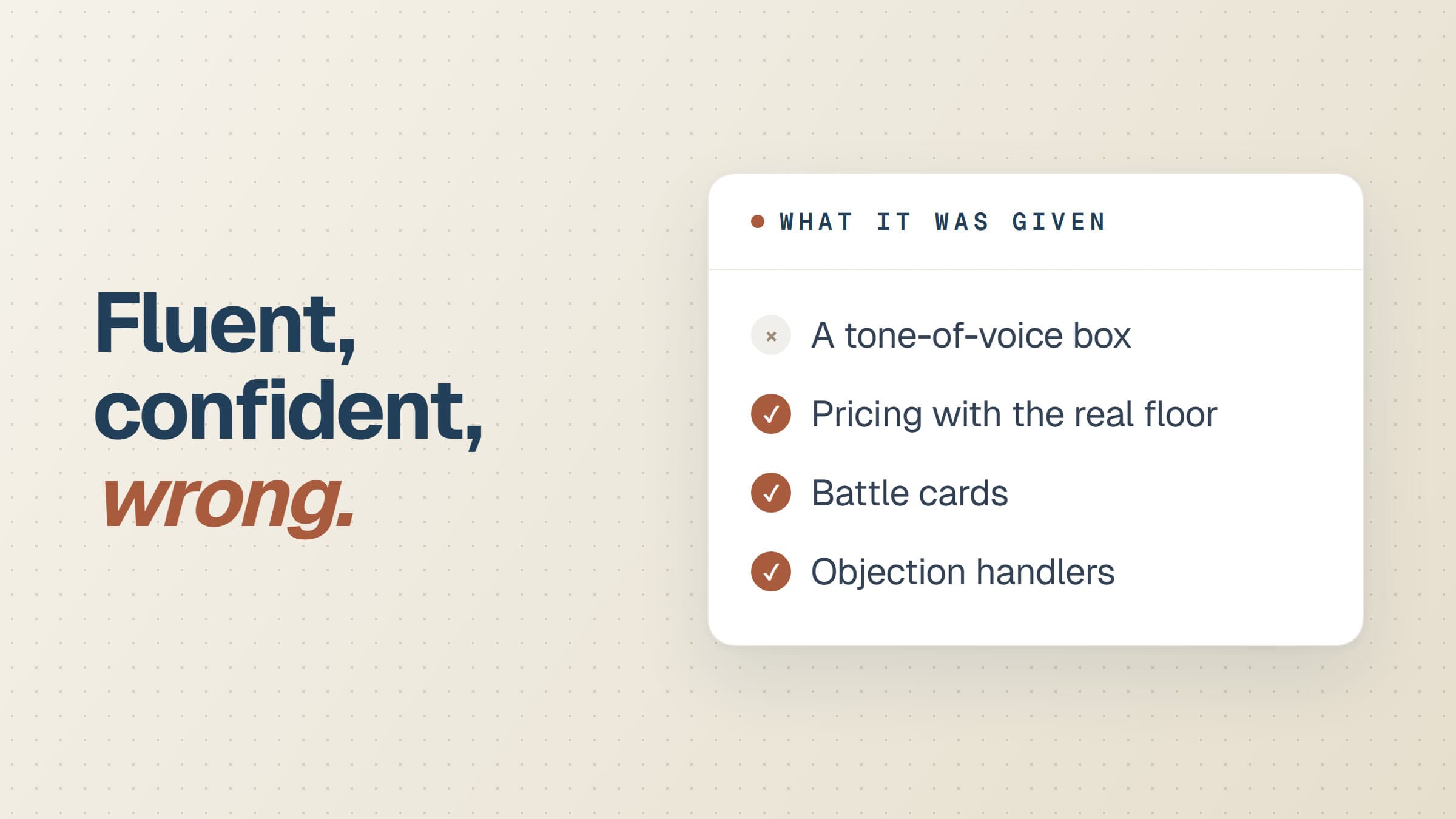
And because it's written in words rather than automations, anyone on the team can read it, question it and change it. The logic stops being tribal knowledge. That's what we mean when we say anyone on your team can run it. The agents doing the work are trained the way you'd train a new hire, on your documents, your pricing logic and your objection handlers, not handed a few lines of text.
How Lazure approaches this
Lazure is built so the plumbing half doesn't exist. Prospecting, waterfall enrichment across 50+ providers, AI research, forms, chat, website visitor identification, scoring, ownership-aware routing, scheduling, email and LinkedIn sequences, the AI SDR and meeting recovery all run on one record, in sync with HubSpot, Salesforce, Attio or Zoho. There are no automations to wire between them, because there is nothing between them.
Workflows can be described in plain English and built for you, on the plan that fits your motion. On Command, specialist agents take whole jobs from a plain-English ask, from finding prospects to preparing tomorrow's meeting brief. If you have a GTM engineer, point them at the strategy half. If you don't, you may not need to hire one. Book a demo and we'll show you the system running on your own market.