
Your sales team has a fixed number of hours. Lead qualification is the process of deciding which prospects get those hours.
That is the whole idea, and it is worth stating plainly, because most explanations of qualification skip straight to acronyms. The acronyms are useful. They are not the point. The point is that a rep working 40 leads properly will beat a rep working 400 badly, and qualification is how you decide which 40.
Key terms
- Fit, whether this company should buy from you at all.
- Intent, whether they are actively looking right now.
- Timing, whether they are in a position to act on it.
- MQL / SQL, a marketing-qualified lead has met a scoring threshold; a sales-qualified lead has been accepted by a rep as worth working.
- Disqualification, a decision, not a failure. Ruling someone out early is the highest-value output of the process.
What is lead qualification?
Lead qualification is the process of evaluating whether a prospect is a good fit for your product, likely to buy, and worth a rep's time, before that time is spent.
It runs at two levels, and conflating them is where most confusion comes from. Marketing qualification is automated and shallow: it sorts a large number of leads using data, and its job is to keep obviously wrong ones out of the queue. Sales qualification is human and deep: a rep establishes whether a real problem exists, who owns it, and what happens if nothing changes.
Everything that follows is about making the first kind good enough that the second kind is worth doing.
Fit, intent and timing are three different questions
Most scoring models fail because they add these together and produce one number. A lead scoring 82 might be a perfect-fit company with no interest, or a poor-fit company visiting your pricing page daily. Those require opposite responses, and the score cannot tell you which one you have.
Fit is whether they should buy. Firmographics, technographics, the shape of their business against the shape of your product. Fit is stable, it rarely changes month to month.
Intent is whether they are looking. Pricing page visits, a form fill, a demo request, hiring for the role that owns your category. Intent is volatile and decays fast.
Timing is whether they can act. Budget cycle, a contract renewal date, a project already underway. Timing is the one people most often mistake for a no.
Keeping them separate is what lets you route sensibly. High fit and high intent is a meeting today. High fit and low intent is an outbound sequence. Low fit and high intent is the trap, the one that looks urgent and is not worth a rep at all.

The frameworks worth knowing
Three qualification frameworks come up constantly. They are all fine. None of them is a scoring model, and treating them as one is a common mistake, they are conversation structures for a rep, not filters for a queue.
BANT
BANT. Budget, Authority, Need, Timeline. Built at IBM for a world where one person signed. It is fast and most reps can hold it in their head, but it assumes a single decision-maker and it puts budget first, which discourages exactly the early conversations that create budget.
MEDDIC
MEDDIC. Metrics, Economic buyer, Decision criteria, Decision process, Identify pain, Champion. Designed for large, multi-stakeholder enterprise deals, and genuinely good at them. It is also heavy: filling it in honestly takes real discovery, which makes it a poor filter for the top of a high-volume funnel.
CHAMP
CHAMP. Challenges, Authority, Money, Prioritisation. BANT reordered to lead with the problem instead of the budget. A sensible correction for inbound, where someone arriving with a problem has not yet thought about what it costs to fix.
Pick one for your reps and be consistent about it. Which one matters far less than whether everyone is using the same one, because the value is comparability across deals, not the acronym itself.
Why qualification quietly stops happening
Here is the honest version of what goes wrong. Nobody decides to stop qualifying. It degrades, in a specific and predictable order.
First, the criteria stay in someone's head rather than in a document, so two reps qualify differently and nobody notices. Then volume rises and manual research becomes unaffordable, so reps start guessing from a job title. Then the scoring model, built once, eighteen months ago, by someone who has since left, stops matching what actually closes, and people quietly stop trusting it. Finally the queue becomes undifferentiated, and everyone works from the top.
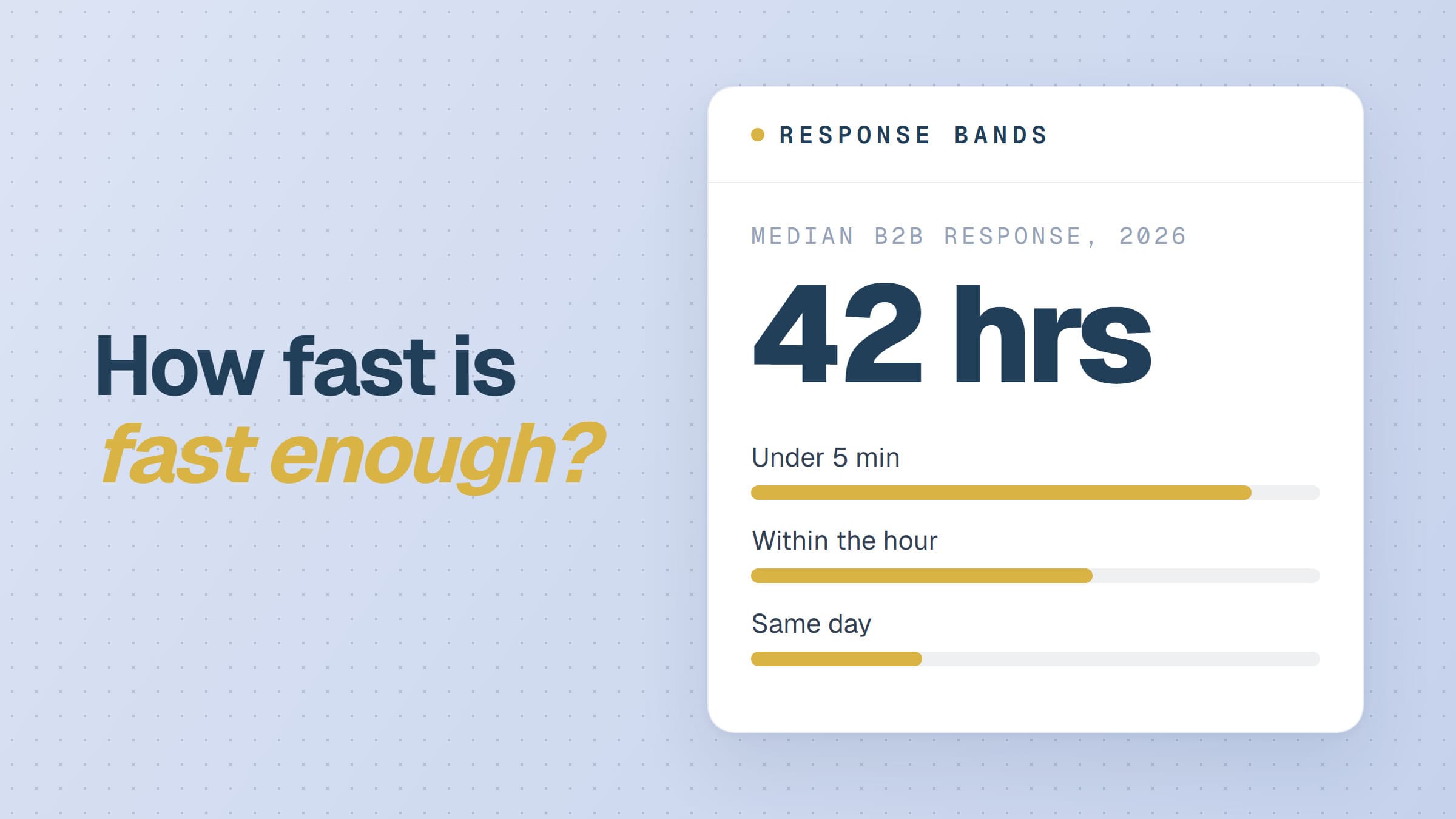
The 2026 benchmarks put the median MQL-to-SQL conversion at about 13%, with the top quartile near 28% and B2B SaaS specifically running 18–22%. Read the median the other way round: roughly 87% of marketing-qualified leads are never accepted by sales. Multiply that against a median cost per lead of $213 and the cost of qualifying late becomes a budget line rather than a process complaint.
Nobody decides to stop qualifying. It degrades, first into guessing from a job title, then into working the queue from the top.
How to scale it without adding headcount
The instinct is to hire someone to do the qualifying. That works until volume rises again, at which point you have the same problem and a larger payroll. Three changes hold up better.
Score fit automatically, always. Fit is computable from data you can get without asking anyone. There is no reason a human should be the first thing to establish whether a company is the right size, in the right market, running the right stack.
Let intent set the order, not the score. A perfect-fit company that has never visited your site is an outbound target. A moderate-fit company reading your pricing page twice this week is today's call. Collapsing both into one number out of a hundred loses the distinction that matters most.
Reserve human qualification for what only humans can do. Discovery of the actual problem, the politics of the decision, whether the champion can carry it. None of that survives being turned into a form field.
The reason this is now practical is that the judgement part of fit scoring, reading a careers page, weighing a title against company size, deciding whether a paragraph of free text signals a real problem, can be defined once and applied to every record. It was never that the work was hard. It was that it was uneconomic below a certain deal size.
In Lazure that definition is yours: you write the criteria in plain language, and they run on every lead as it arrives, before anything is routed to a person.
Four things that go wrong
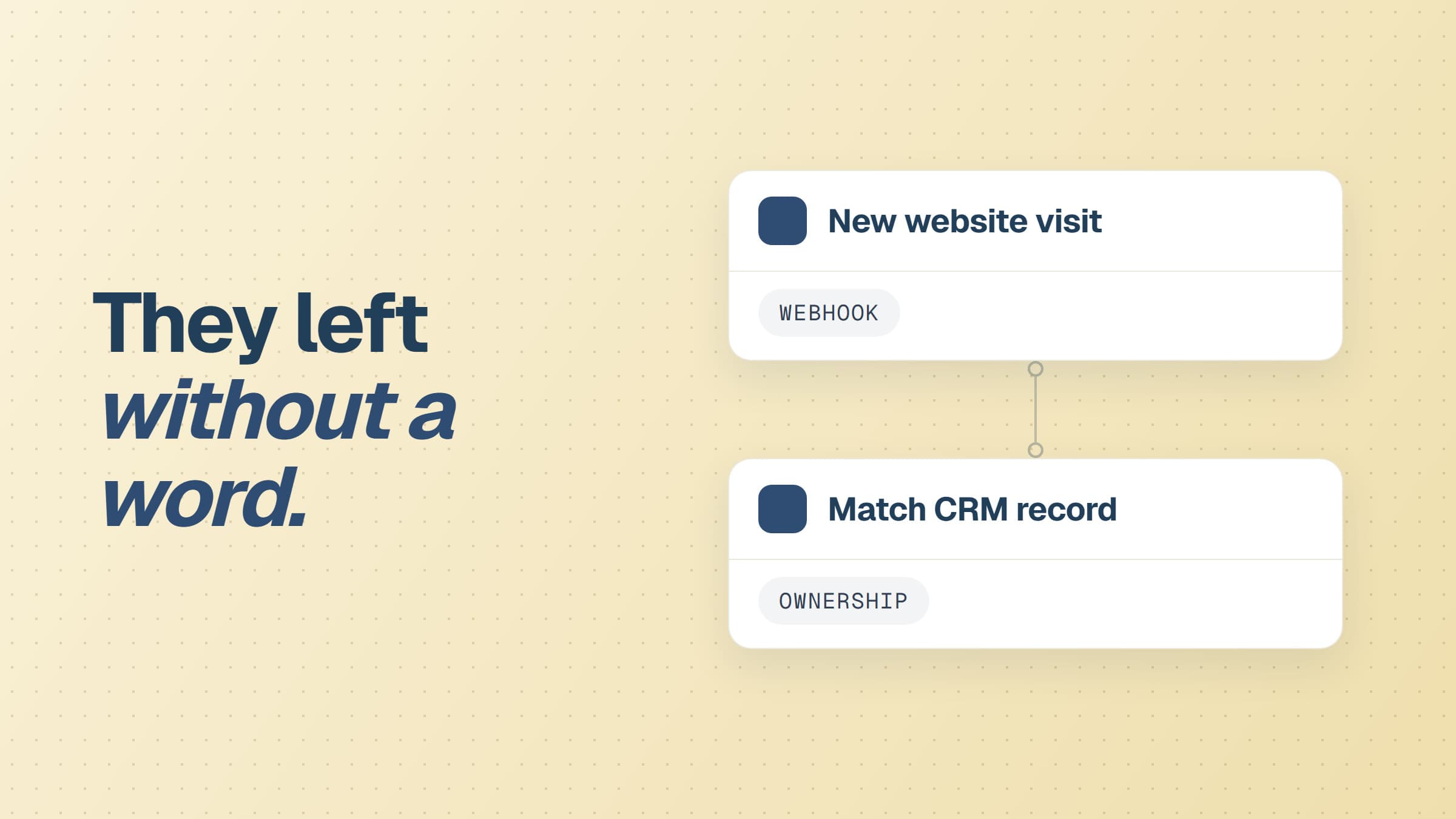
Qualifying after assignment. If a lead can reach a rep before anything has established fit, your qualification is decoration. The order has to be capture, enrich, qualify, then route.
Treating disqualification as failure. A clean no is worth more than a maybe, because it returns hours. Teams that measure only MQL volume will never produce one.
Never revisiting the criteria. Your ICP moves. If nobody has compared the scoring model against what actually closed in the last two quarters, it is describing a company you used to be.
Scoring on data you do not have. A model that depends on fields which are empty for most records will produce confident answers built on almost nothing, which is worse than no answer, because it looks the same as a good one.
Common questions
What is the difference between an MQL and an SQL?
An MQL has crossed a threshold you defined, a score, a form fill, a set of behaviours. An SQL has been looked at by a rep and accepted as worth working. The gap between the two numbers is the most useful diagnostic in the funnel: if most MQLs are rejected, the model is wrong, not the leads.
Should qualification be automated or human?
Both, at different depths. Automate fit scoring and prioritisation, because they are computable and they run at volume. Keep discovery human, because it is a conversation and cannot be inferred from firmographics.
How many criteria should a scoring model have?
Fewer than you think. Most working models come down to three or four things that genuinely predict a close, plus a short list of hard disqualifiers. Long models feel rigorous and mostly add noise.
What should happen to leads that do not qualify?
Nurture, suppression, or an honest early no, not silence. Most of them are timing failures rather than fit failures, and a lead that is wrong this quarter is often right next year. Keeping them in a segment is what makes re-engagement possible later.
Where to start
If you are rebuilding qualification, do it in this order. Write down what a good lead actually looks like, in sentences, from the deals that closed rather than from a persona document. Split fit from intent so they can be acted on separately. Then move the whole thing in front of routing, so nothing reaches a rep unqualified.
The measure of success is not a higher MQL count. It is a rep looking at their queue and believing it.
How Lazure does qualification
The argument above is that fit should be automatic, intent should set the order, and humans should keep the discovery. Lazure is built in that shape.
Your ICP criteria are written once, in plain language, in AI settings. Not a fixed model, and not a weighting on firmographic fields. An AI node then scores each lead against those criteria, alongside engagement and whatever research you asked it to run, and you decide in the prompt what it weighs. That is what lets the idiosyncratic disqualifiers in: a competitor's customer, an unsupported market, a title that means something different at that company size.
It runs on enriched and researched data, in that order, before routing. Intent stays a separate axis, so a perfect-fit company with no activity is sequenced while a moderate-fit company reading pricing gets called. Leads that do not qualify go to a named segment rather than into silence, which is what makes re-engagement possible later.