
It is Tuesday. You are back from the conference with 200 badge scans, a tote bag, and a genuinely good memory of about fifteen conversations.
On Wednesday the SDR team starts building the sequence. On Thursday the list is still being cleaned, because half the scans have no usable email and a quarter of them are students or vendors. By Friday something goes out, a competent, generic email that mentions the event by name.
By then the thing you actually paid for is gone. Not the leads: the warmth. The specific, perishable advantage of having stood in front of someone and talked to them.
The short version
- The asset from an event is the conversation, not the scan. Conversations decay in hours.
- The practical window is 24–48 hours. After 72, you are doing cold outbound with a weak pretext.
- Most teams miss it on list preparation, not on writing.
- Whoever spoke to them has to record what was said, in one line, before they leave the stand.
Why the window is measured in hours
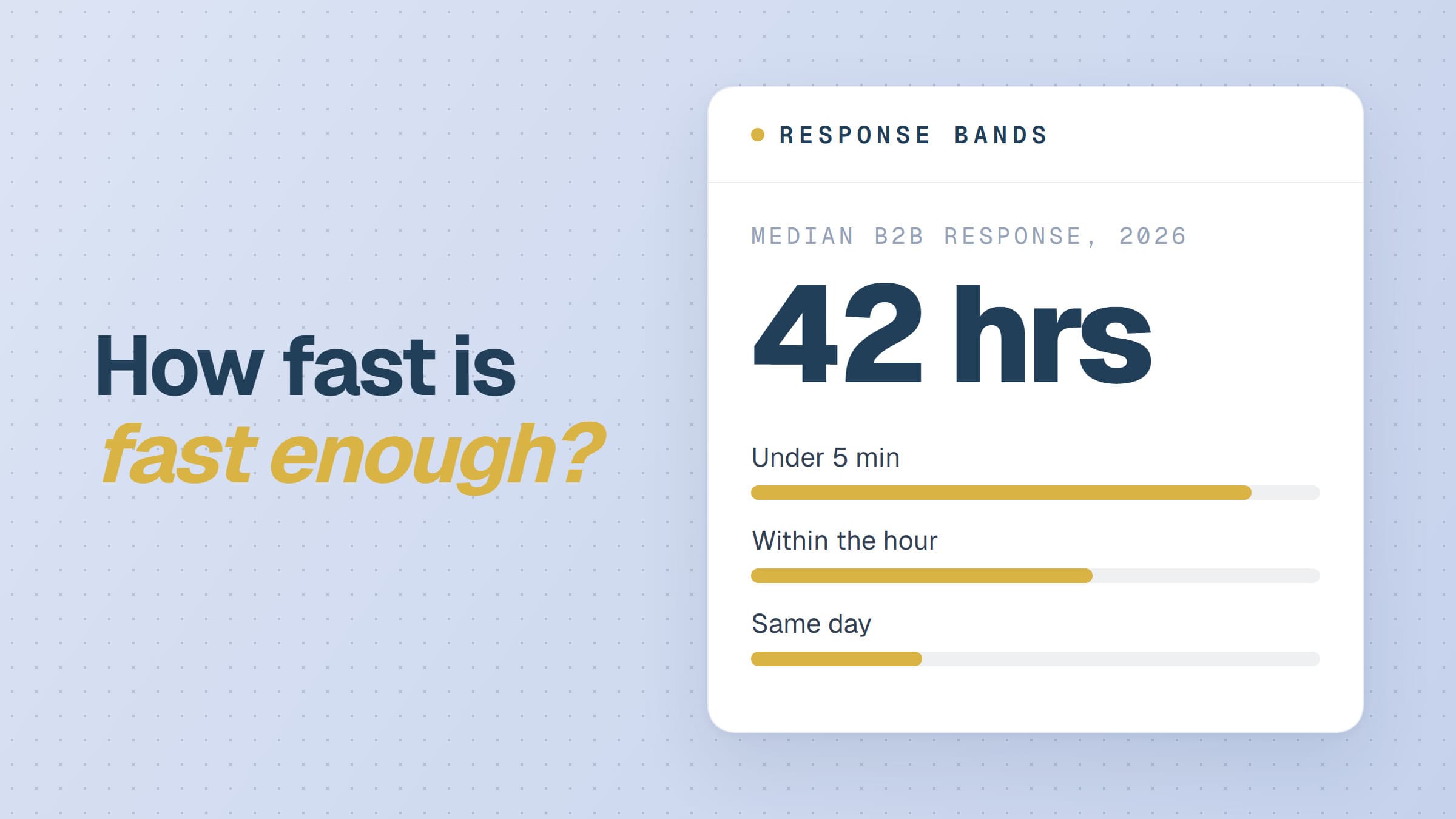
Event ROI does not decline gently. It falls off a step, and the step is somewhere around the second day.
The reason is not that people forget the event, they will remember it for weeks. It is that they forget which vendor was which. On day one you are the person they talked to about their reconciliation problem. On day four you are one of eleven booths, and your email is one of eleven emails, all of which open by saying it was great to meet at the show.
Hour 0–24. The conversation is still in their head. A message that references what you actually talked about reads as a continuation, not as outreach. This is the only window where you get to use the word “yesterday”.
Hour 24–48. Still warm, but the specifics are fading. You can reference the event, and you should reference the conversation, but you can no longer assume they remember your face.
Hour 48–72. The event has become one of several things that happened last week. Your message now competes with everything that piled up while they were away, including, usually, three of your competitors who moved faster.
After 72 hours. It is cold outbound with a weak pretext. Still worth doing, but you have thrown away the only advantage the event bought you.

Teams miss it on preparation, not on writing
Ask why follow-up went out on Friday and you will rarely hear that nobody could think what to say. You will hear about the list.
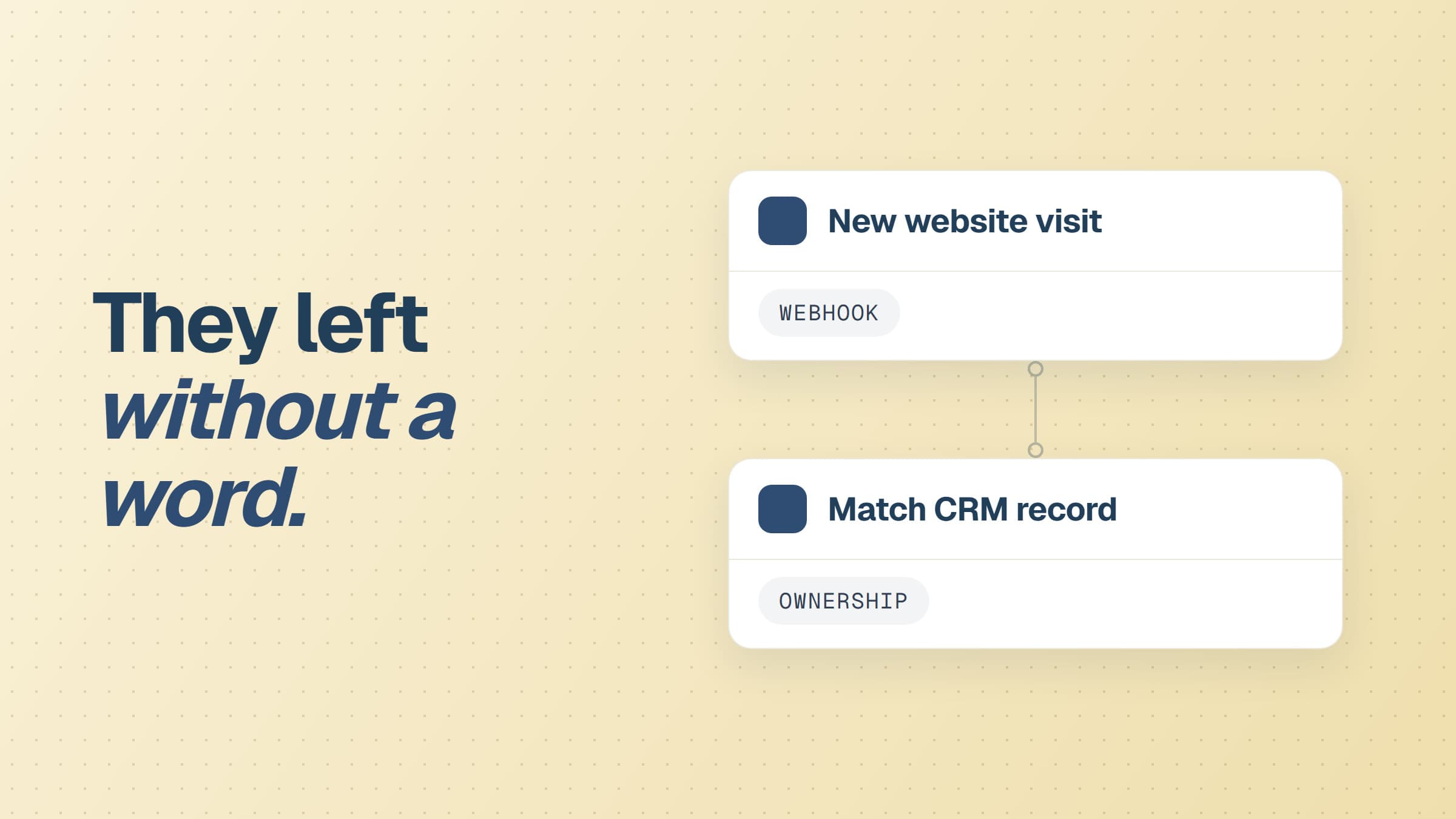
Badge scans arrive as a CSV with inconsistent fields. A meaningful share have no direct email, or a personal one. Some scans are competitors, some are students, some are people who wanted a free water bottle. Somebody has to work out which are which, find the missing contact details, and match them against the CRM so existing customers do not receive a prospecting email.
That is one to two days of work if it is done by hand, and it lands squarely inside the window. The writing takes an afternoon. The preparation is what eats the advantage.
On day one you are the person they talked to about their reconciliation problem. On day four you are one of eleven booths.
What to do instead
Four changes, in the order they matter.
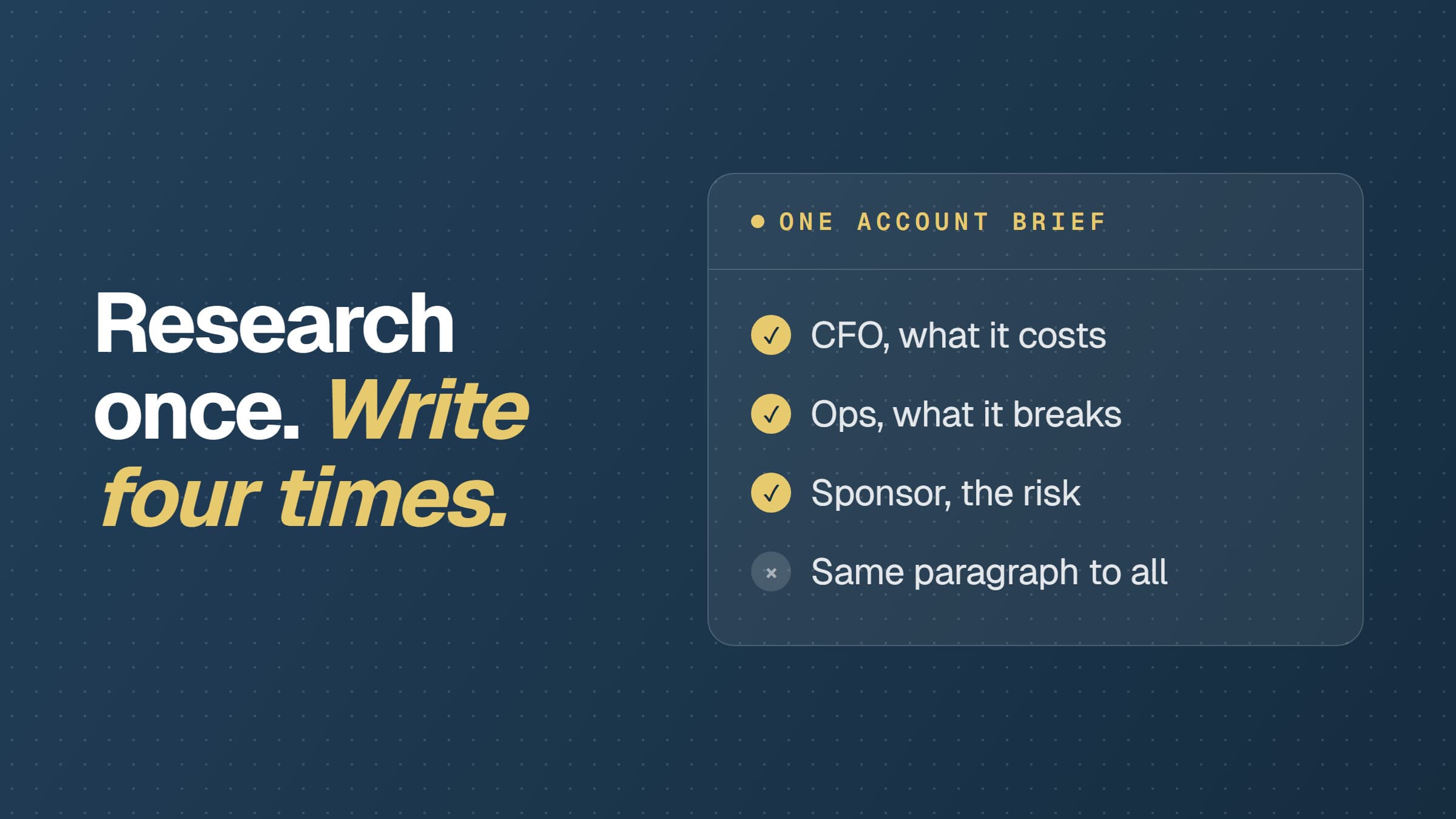
Capture the conversation, not just the badge. A scan gives you a name and a company. What makes the follow-up work is the sentence somebody wrote down thirty seconds after the conversation ended, what they asked, what they complained about, what they were sceptical of.
Enrich and qualify before anyone writes anything. Two hundred scans are not two hundred prospects. Some are students, some are competitors, some are vendors who wanted your swag. Sorting that by hand on Wednesday is how Wednesday disappears.
Segment by what happened at the stand. A demo request is not the same as a business card left in a bowl. Tiering these differently is the difference between a follow-up that converts and a blast that annoys.
Send while it is still Tuesday. Everything above has to be doable in hours, not days. If your process requires a person to sit down with a spreadsheet before anything sends, the window closes before the process finishes.
The first one is a discipline, not a tool: whoever had the conversation writes one line about it before they walk away. Everything downstream gets better if that line exists, and nothing recovers it if it does not.
The other three are volume problems. Enrichment, deduplication against the CRM and tiering can run on the list as it uploads, which turns two days of preparation into the time it takes to have lunch.
What the message has to do
Three things, in this order. Establish which conversation this was. Say something only someone who was there could say. Make an ask proportionate to how warm they actually are.
The first is where most follow-up fails. “Great to meet you at the show” establishes nothing, it is the opening line of every other email in their inbox that morning. “You mentioned you are reconciling three systems by hand at month end” establishes everything, and it takes the same number of words.
The third matters because the tiers are genuinely different. Someone who asked for a demo at the stand should get a calendar. Someone who had a good ten-minute conversation should get a question. Someone whose badge was scanned in passing should get something light and low-commitment, or nothing at all.
For the top tier it is worth doing this on more than one channel. A connection request from the person they actually spoke to, sent the same day, does work an email cannot.
The test for whether you are set up for this
Before the next event, ask one question: if the list landed at 6pm on the last day, what could go out by lunchtime tomorrow?
If the answer involves a spreadsheet, a data provider with a queue, and a person who is on a plane, the answer is nothing, and the window will close again. The work to fix that is done before the event, not after it.
Events are among the most expensive pipeline a company buys. The follow-up is the cheapest part of the whole exercise, and it is the part that decides whether the rest of it was worth doing.
How Lazure compresses the window
The window is lost to list preparation, so that is the part worth automating.

A badge-scan CSV or an event form uploads as a list trigger. Waterfall enrichment fills the missing work emails and verifies them, including catch-all domains, so the send does not damage your sending domain. The list is deduplicated against your CRM and checked for existing customers and account owners.
An AI transform node then tiers the list against your ICP, and the note a rep wrote about each conversation is carried into the message, so the follow-up references what was actually discussed. Email and LinkedIn run from the same sequence, which matters most for the top tier.