
Account-based outbound is not a controversial idea. Pick the accounts you actually want, learn something real about each one, and reach several people there with messages that could only have been written for them.
It works. It also stalls constantly, and almost always at the same point: the research. Understanding fifty companies properly is a week of somebody's life, and most teams do not have that somebody. So the research gets thinner, the personalisation degrades into a company name in the first line, and eighteen months later the conclusion is that ABM did not work.
The short version
- The bottleneck is research per account, not writing per contact.
- Research the account once; write several messages from it.
- Multi-threading is the point, one contact per account is not ABM.
- A shorter list you can actually work beats a longer one you cannot.
The list is the strategy
Everything downstream is determined by how many accounts you choose, because the number decides how much attention each one can get.
Pick fewer accounts than feels comfortable. A list of 500 named accounts is a list nobody will research. Fifty is a programme. The instinct to widen the list is the first thing that kills it.
Build it from what actually closed, not from a persona document. Look at your best twenty customers and find what they had in common at the point they bought, not their industry, which is usually a red herring, but the situation they were in. Then find companies in that situation.

Research once, per account
This is the change that makes the arithmetic work.
Research the account once, and reuse it. The expensive part is understanding the company, what they sell, what changed recently, what they are hiring for. That work is per-account, not per-contact, and most teams redo it for every person they email.
What belongs in an account brief is short: what they sell and to whom, what has changed in the last six months, what they are hiring for, what they use that you integrate with or replace, and the one thing that makes them plausibly a fit right now. Five lines. Anything longer will not be read by the rep it was written for.
Assembled by hand that is thirty to sixty minutes per account. Assembled from enrichment and automated research across public sources, it is minutes, and the quality difference is smaller than people expect, because most of what a human finds in the first half hour is public and structured.
Multi-threading is not optional
One contact per account is not account-based outbound. It is ordinary outbound with a nicer list.
Write to the role, from the account. One account brief, several messages. The CFO and the ops lead care about different consequences of the same problem, and both messages should be visibly about their company.
Reach three to five people at each account, in the same window, with messages that share a premise but not a paragraph. The economic buyer cares that the problem costs money. The person who owns the process cares that it is tedious and error-prone. The executive sponsor cares that it is a risk. Same account brief, three different consequences.
Sending the identical email to four people at one company is the failure mode here, and it is obvious from the inside of that company in a way it never is from the outside.
One contact per account is not account-based outbound. It is ordinary outbound with a nicer list.
What goes wrong
The list grows. Someone asks why the programme is not producing more pipeline, and the answer is to add accounts. Adding accounts is what caused it.
Ownership is not checked. Multi-threading into an account another rep is working is the fastest way to lose internal support for the whole programme.
Personalisation is cosmetic. A first line about their recent funding round, followed by three paragraphs of boilerplate, is worse than no personalisation, it reads as a template with a hole in it, which is exactly what it is.
Nobody measures at the account level. ABM reported as reply rate per contact will always look mediocre. The unit is the account: how many of the fifty are now in a conversation.
What good looks like
Fifty accounts. A five-line brief for each, refreshed when something changes. Three to five contacts per account, written from that brief, sent inside the same fortnight. Ownership checked before anything sends. And a review that asks how many accounts moved, not how many emails went out.
None of that requires analysts. It requires the research to be a repeatable step rather than a person's afternoon.
How Lazure makes the research affordable
The bottleneck is research per account, so that is where the automation belongs.
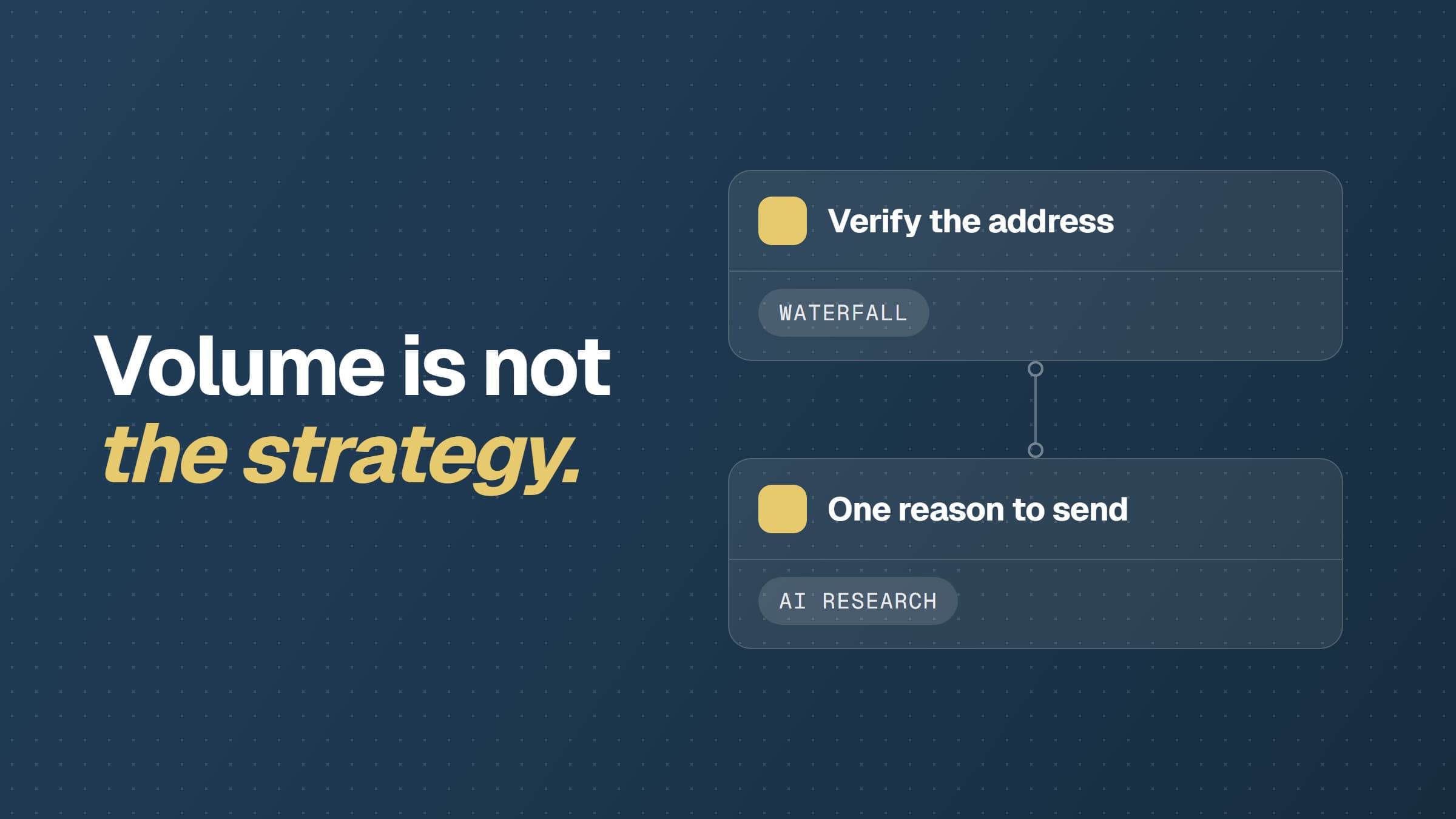
Upload or build the account list, and enrichment resolves contacts at every account across 50+ sources, charged only on verified results. AI research then assembles the account brief, what they sell, recent changes, hiring signals, technology in use, once per company rather than once per contact.
Tiering comes first, because tier is what decides how much effort an account earns. An AI node reads the brief, sorts each account into a tier, and pulls out the one signal that makes it worth a conversation now rather than next quarter.
Ownership is checked next, and the company record is updated with all of that research and enrichment, so the account arrives already briefed. Owners are then assigned on whatever criteria you actually use: tier, territory, segment, named accounts. What an owner inherits is a single record, with every contact enrichment resolved at that account, the buying signals, the website visits, the social engagement and anything already sequenced, in one place. The next move is usually obvious once it all sits together, which is the part worth seeing for yourself.