
Almost every team that has declared cold outbound dead ran the same experiment first. Reply rates softened, so they increased sends. Reply rates softened again, so they bought more contacts and increased sends again. Somewhere in the third round the domain started landing in spam, and the conclusion was that the channel had stopped working.
The channel is fine. What stopped working is the arithmetic, and it stopped working for a reason that is easy to miss from inside it: the two things cold outbound used to get for nothing, inbox access and novelty, now both have to be earned for every message you send.
Which is annoying, because earning them is unglamorous work. It is list hygiene, domain plumbing and research, not copywriting. But it is also the part that is now almost entirely automatable, which is the only reason the motion is still economic at all.
The short version
- Deliverability is a floor. Below it, the message does not matter.
- A verified list beats a big one, and the difference is visible within a week.
- Every send needs one specific reason it is arriving today.
- Relevance at volume is the actual problem, and the only part worth automating heavily.
- Measure replies per hundred verified contacts, never per send.
The floor you cannot argue your way past
Deliverability is a floor, not a tactic. Below it, nothing else you do to the message matters.
Sending infrastructure behaves like credit. It takes months to build and one bad week to spend. A list with a high proportion of dead addresses produces bounces, bounces produce reputation damage, and reputation damage quietly moves your next campaign to a folder nobody opens. The campaign still reports as sent. That is the trap: every number on the dashboard looks normal while the actual delivery rate collapses.
The mechanics worth getting right are boring and finite. Send from a separate domain so a bad month cannot touch your main one. Warm it properly rather than nominally. Keep per-mailbox volume low enough to look like a person. And treat catch-all domains as their own category, because a catch-all accepts every address you send it, including ones that were never real, and most verification tools happily report that as valid.
None of this is strategy. It is the cost of entry, and it is the reason two teams sending identical copy can see completely different results.
Verified beats big, every time
A verified list beats a big one, and the gap shows up inside a week.
The instinct when replies drop is to widen the list. It is the wrong direction, because the thing that dropped was not reach. A single data provider will typically find a verified work email for around seven in ten of the people you ask about, and the three that fail are not random. They skew towards smaller companies, newer hires and exactly the roles that tend to reply.
The fix is to ask several providers in sequence rather than betting on one, and to pay only when one of them returns something verified. Run in that order, coverage climbs well past what any single source gives you, and the cost per usable contact falls rather than rises, because you stop paying for misses.
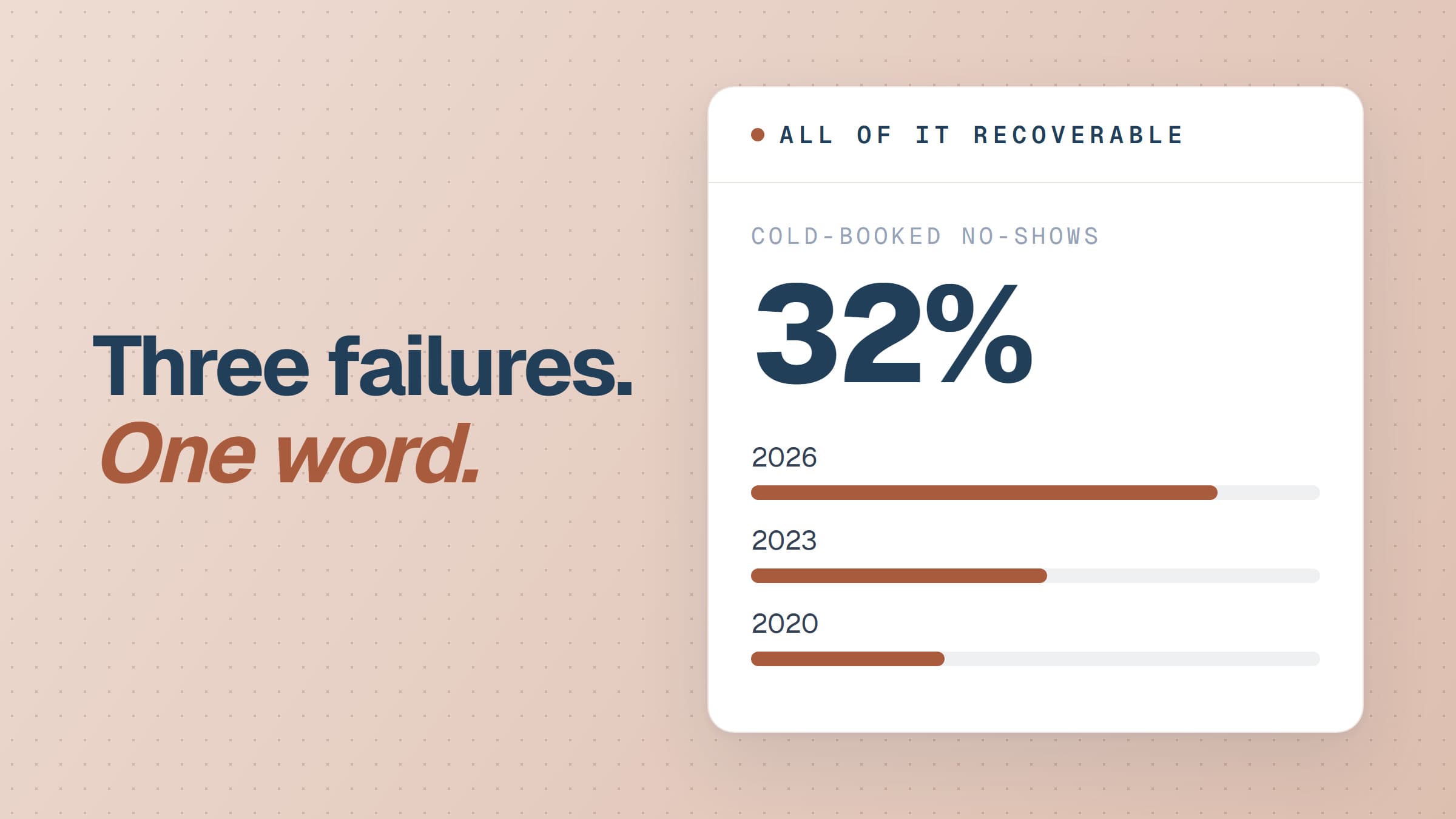
The practical test is simple. Take a hundred contacts from your current list, verify them properly, and count how many survive. If the answer is seventy, you have been measuring your reply rate against a denominator that was thirty percent fiction.
If a hundred contacts verify down to seventy, you have been measuring your reply rate against a denominator that was thirty percent fiction.

One reason it is arriving today
Every message needs one specific reason it is arriving today. Without it you are writing about yourself.
This is the difference between a message that gets read and one that gets pattern-matched. Not a personalised opening line, which every buyer now recognises as a merge field with better manners. A reason. They are hiring three people into the function you sell to. They just changed a system yours plugs into. They opened an office in a market you already serve. Someone in the account read your pricing page twice this week.
The reason does not need to be dramatic, and it does not need to be flattering. It needs to be true and specific enough that the recipient can tell it was not sent to four thousand other people on the same morning.
This is also the cleanest disqualifier you have. If nobody on your team can name a reason this account should hear from you this month, that is not a list problem to be solved with better copy. It is an account that should not be on the list.
Relevance at volume is the real problem
Here is the honest tension in cold outbound, and it is arithmetic rather than philosophy.
A good rep can research an account properly in fifteen minutes. Reading the careers page, the recent announcements, the product, working out which of the four plausible pain points is the live one. Fifteen minutes each, and the output is genuinely better than anything automated. But fifteen minutes each means about thirty accounts a day, which is not a pipeline motion, it is a craft project.
So teams do the thing that looks like a compromise and is actually the worst of both: they template the research away, keep the volume, and send four thousand messages that are all technically personalised and all obviously not. The buyer reads the first line, recognises the shape, and deletes.
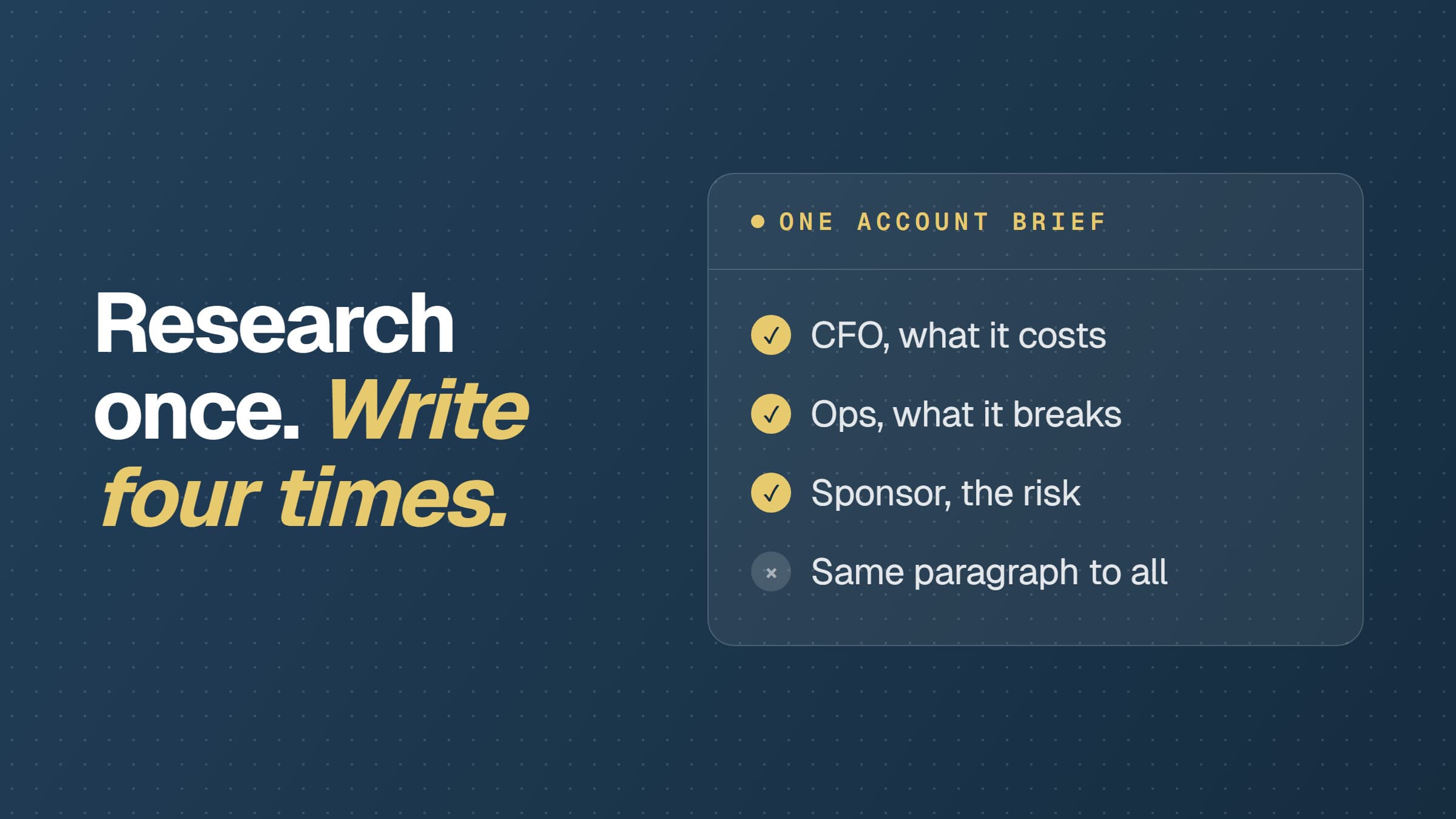
The case for automating the research layer is not that a model does it better than your best rep. It does not. The case is that judgement applied to six thousand accounts a year was never affordable with people alone, and a message with a real reason in it beats a message with a merge field in it by enough to change the economics of the whole channel.
What to measure instead of sends
Sends is a vanity denominator, and it is the number that encourages exactly the behaviour that broke the channel.
Replies per hundred verified contacts is the honest one. It cannot be gamed by buying more addresses, it moves when the list gets cleaner, and it moves again when the reasons get sharper. Split it into positive replies and the rest, because a channel producing volume and hostility is failing in a way the combined number will hide from you for a quarter.
Then look at bounce rate and spam complaints as a leading indicator rather than a report card. Both move before your reply rate does. By the time replies drop, the damage was done three weeks ago.
And watch the worst decile of accounts, not the average. The average tells you the channel works. The worst decile tells you who you are annoying, and whether the list has a segment on it that should never have been there.
What good looks like
A cold outbound motion that holds up has a small number of properties, and none of them are about copy.
The list is smaller than the one you could buy and every address on it has been verified recently. Every account has a stated reason it is being contacted now, and accounts that cannot produce one are removed rather than written around. The CRM has been checked, so existing customers and open opportunities are not receiving cold sequences from someone who has never spoken to them. And the sending infrastructure is treated as an asset with a maintenance schedule rather than a setting somebody configured once.
That motion sends fewer messages than the one it replaced and produces more conversations. Which is an uncomfortable result for anyone whose target is a send count.
How Lazure runs cold outbound
Everything above is list and research work, which is exactly the part that used to make the motion uneconomic.
Build or upload the list, and waterfall enrichment runs across 50+ providers in the order you set, charged only on verified results, so coverage climbs without the bill climbing with it. Catch-all domains are treated as their own case rather than waved through as valid. AI research then assembles the account picture and pulls out the specific reason this account is worth a message now, once per company rather than once per contact.
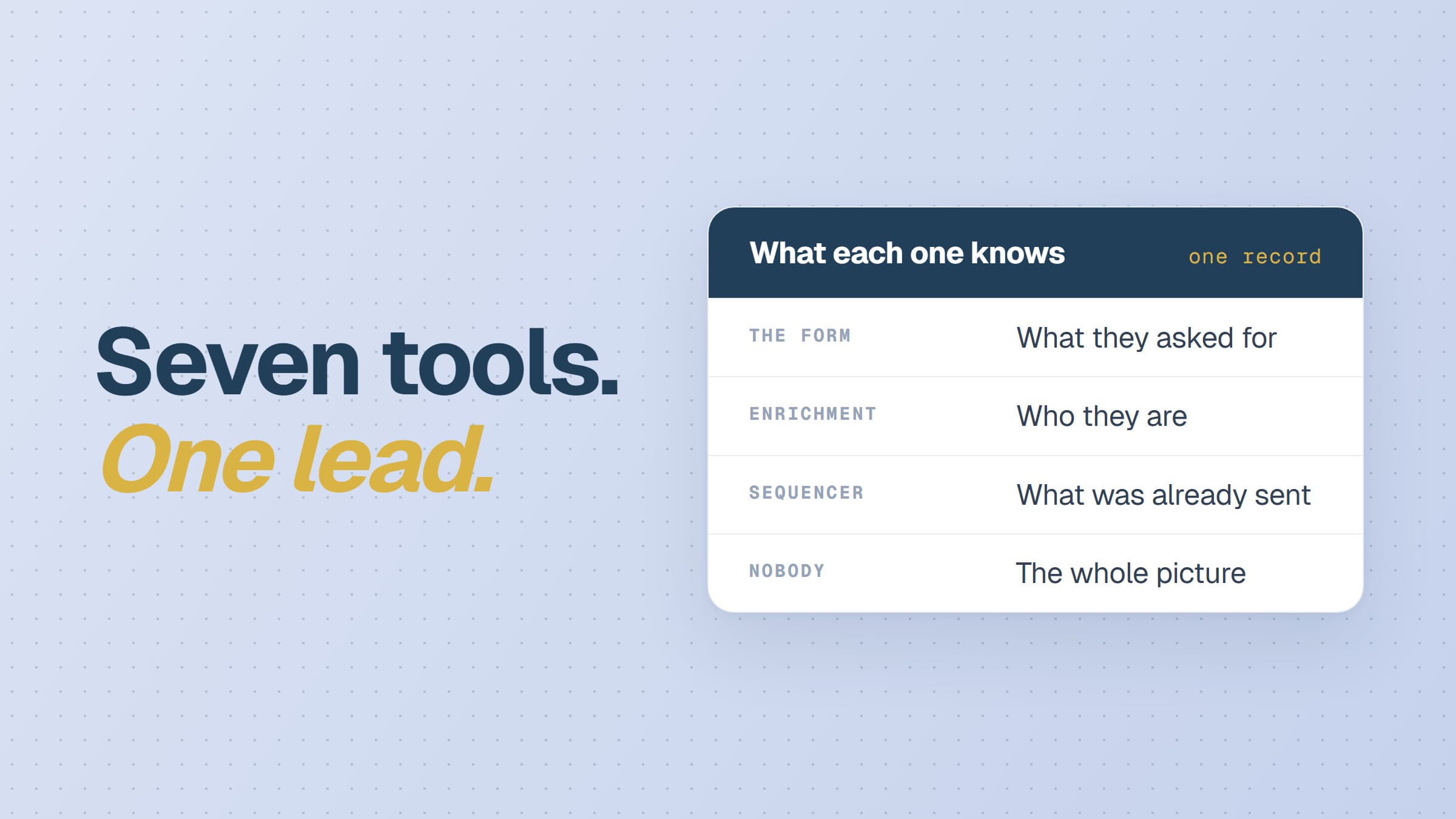
Scoring happens against your own ICP criteria, written in plain language in AI settings, so the accounts that cannot justify a reason never reach a sequence. Ownership is checked against HubSpot, Attio or Zoho before anything sends. And when someone replies, the AI SDR can handle it from the same record, with the research already attached, so a reply at 9pm on a Tuesday does not wait until Thursday for a human to notice it.