Most companies buy inbound and outbound tooling at different times, for different teams, to solve different problems. That is reasonable, and for a while it costs nothing.
What it costs later is specific and easy to picture. Someone in an outbound sequence fills in your demo form on a Tuesday afternoon. Wednesday morning, step three of the cold sequence sends on schedule.
The cold email that arrives the morning after someone books a demo is not a copy problem. It is an architecture problem.
Four things that only break at the seam
The double touch. A prospect gets a cold sequence step and a warm inbound follow-up in the same week, from two different people, about the same product. From inside your company, these are two systems working correctly.
The lost signal. Someone who has ignored six outbound emails visits your pricing page twice. That is the strongest buying signal in the whole record, and the outbound tool cannot see it.
The reset conversation. An inbound lead who was in an outbound sequence three months ago gets treated as brand new. The rep opens with a discovery question the prospect already answered by email, to someone else, in March.
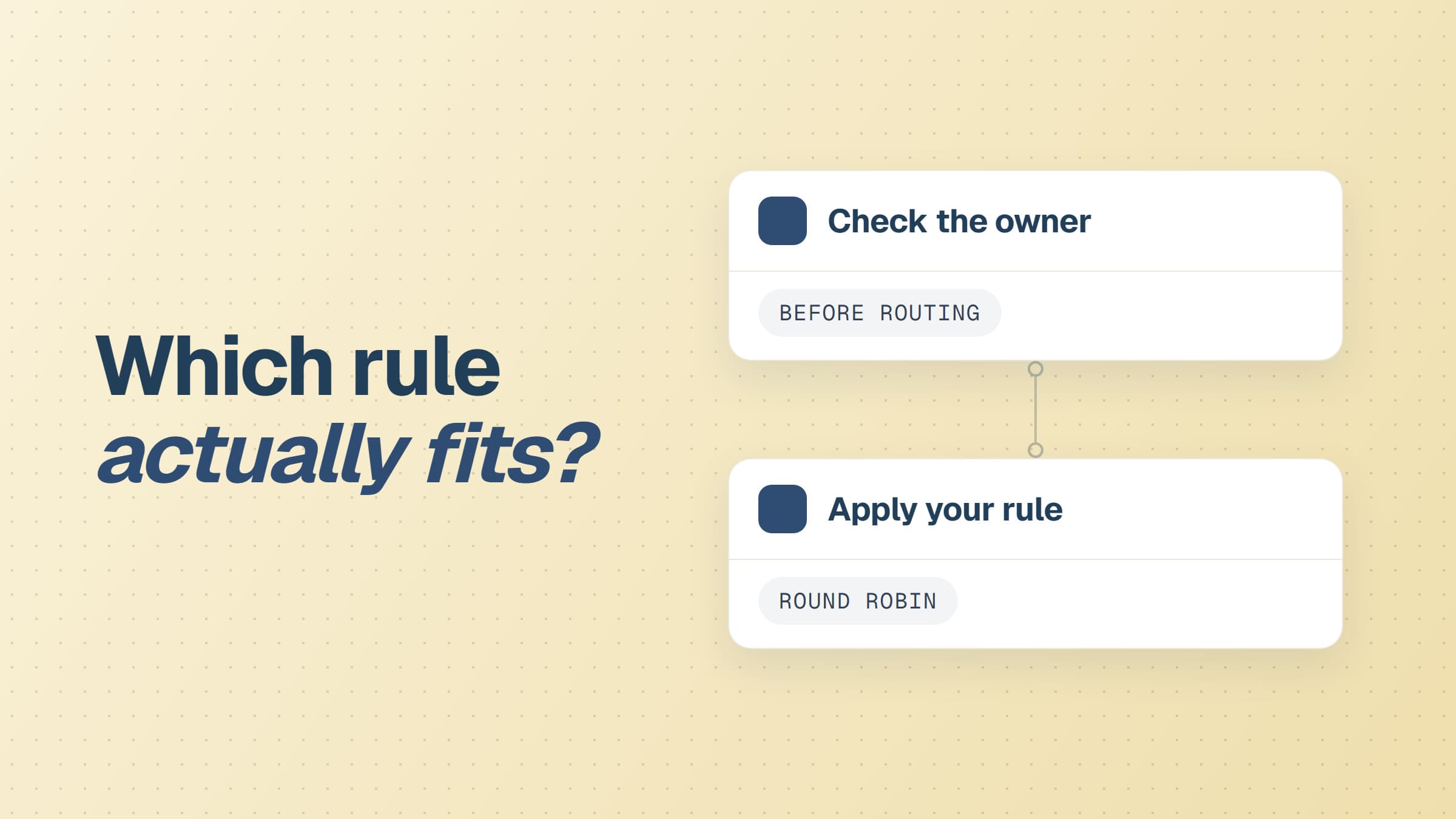
The ownership collision. Outbound owns the account, inbound routes on round robin, and two reps discover each other on the same call.
- Suppression lists synced nightly, at best
- Two records for the same human
- Neither tool holds the whole history
- Reporting credits whoever touched last
- A live sequence pauses the moment a form is filled
- Website behaviour is visible to outbound decisions
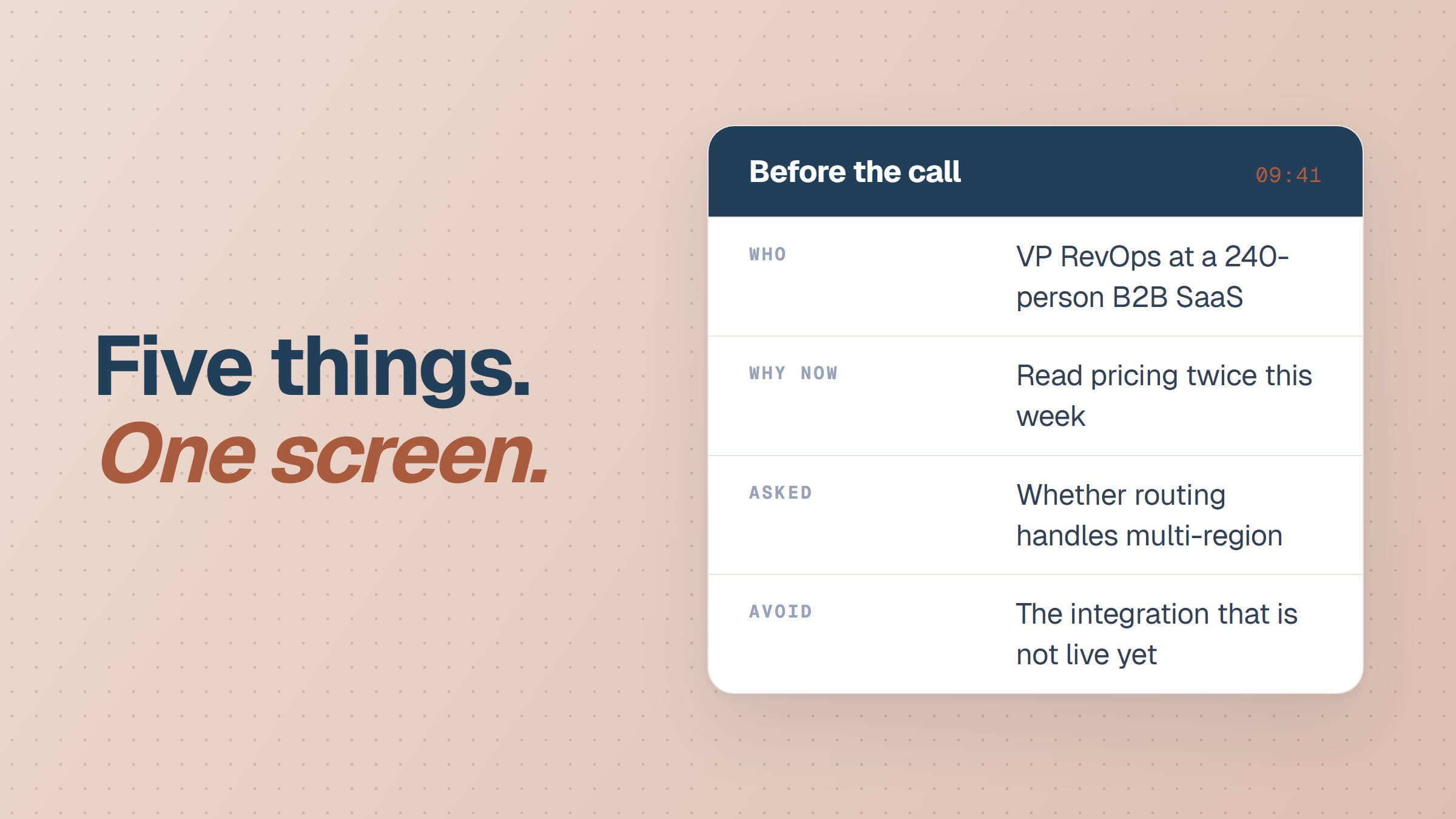
- The rep opens one history, not two
- Attribution is a question about a record, not a reconciliation
Why syncing does not fix it
The usual answer is integration: connect the two tools, sync the suppression list, mirror the fields. It helps, and it does not solve the problem, for two reasons.
The first is latency. A nightly sync is fine for reporting and useless for the case that matters, which plays out over an afternoon. The second is fidelity. Integrations move the fields both systems agree on, email, status, maybe a score. What gets dropped is the free text, and the free text is where the context lives.
So you end up with two systems that agree about a person's status and disagree about everything worth knowing.
A diagnostic worth running: pick someone in your CRM who arrived inbound and had previously been in an outbound sequence. Ask how long it takes to see both histories, in order, on one screen. If the answer involves two tabs and a judgement call about which record is real, that is the seam.
What changes when it is one record
Less than people expect, and all in the same direction: things that used to require somebody to notice now happen by themselves.
A sequence stops when its recipient raises a hand. A visit from a cold account changes who gets called. A rep opening any record sees the whole thing, regardless of which motion produced it. Nobody has to remember to check.